The self loading concrete mixer truck has self loading, weighing, mixing and discharging in one. It can drive flexibly in differen projects like slop protection, road building, ground hardening, tunnel, bridge construction,etc. Rich models meet the need of the projects of different scales. Welcome to learn more at our website: https://www.self-loading-mixer.com/self-loading-mixer/ or send inquiry directly to feedom@haomei-machinery.com.

2025年8月6日星期三
HZS90 Concrete Plant in Uzbekistan
In recent years, Uzbekistan has vigorously pursued various infrastructure construction projects, encompassing a wide range of sectors, including roads, bridges, buildings, and energy facilities. These projects, varying in scale, place stringent demands on concrete production, quality, and timely supply.
Among the various batching plant models, small and medium-sized batching plants, driven by Chinese equipment brands, have captured approximately 40% of the local market share due to their competitive pricing and technical adaptability. The HZS90 concrete plant is a prime example of this type.
The popularity of the 90m³ stationary concrete batching plant stems from a variety of factors. First, its theoretical production capacity of 90m³ per hour effectively meets the needs of most medium-sized construction projects in Uzbekistan. Whether it's urban commercial construction or infrastructure like roads and bridges, this efficiency eliminates the waste of idle equipment caused by overcapacity or the impact of insufficient capacity on project progress.

Secondly, the 90m³ concrete mixing plant excels in site adaptability. Many construction projects in Uzbekistan face complex terrain and limited space. The modular design and flexible site layout of the 90m³ concrete plant enable rapid installation, commissioning, and production within limited space.
Furthermore, cost-effectiveness is a key factor in its popularity. For many local construction companies and project contractors, cost control is crucial while ensuring project quality. Compared to larger batching plants, a 90m³ concrete plant offers relatively low equipment purchase, transportation, installation, and maintenance costs, while also offering considerable production capacity. This creates an ideal input-output ratio, meeting the local market's demand for cost-effectiveness.
The choice of a twin-shaft concrete mixer for the 90m³ concrete plant in Uzbekistan was no accident; it was a result of a thorough adaptation based on local construction requirements, equipment performance, and project realities.
The core advantages of a twin shaft mixer batching plant lie in mixing efficiency and uniformity. The blades on its two parallel mixing shafts are arranged in a spiral pattern. The high-speed rotation creates a strong shearing, squeezing, and tumbling action on the material, effectively blending the cement, aggregate, water, and additives in a short period of time.
For Uzbekistan's common C30-C50 concrete grades, as well as specialized concrete containing admixtures such as fly ash and slag, the twin-shaft mixer ensures a mix accuracy of within ±2% per cubic meter of concrete, meeting the high strength and durability requirements of bridges and high-rise buildings.
Original source: https://www.haomei-machinery.com/a/hzs90-concrete-plant-in-uzbekistan.html
Is A Concrete Mixer and Pumping Machine Cheap
In modern construction, the transportation and mixing of concrete are crucial processes. Concrete mixer and pumping machine, which combine both mixing and pumping functions, are gradually gaining market recognition. Compared to other types of concrete pumps, they offer unique economic advantages and are widely used in many countries around the world.
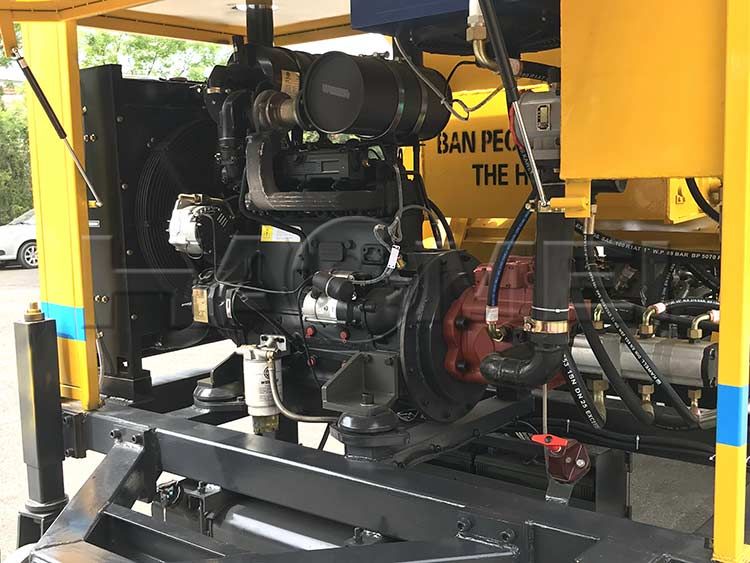
Significant Price Advantage
1. Low Initial Purchase Cost
Traditional concrete pumps, such as the common large concrete pump trucks, are often prohibitively expensive. Large concrete pump trucks, due to their complex boom systems, high-end chassis configurations, and advanced pumping technology, typically cost between $300,000 and $1.5 million, or even more.
Concrete mixer pumps, however, offer significant advantages in terms of purchase cost due to their integrated functionality and design. Typical prices for small concrete mixer pumps range from $10,000 to $100,000, with some simpler models costing as little as $10,000 to $50,000.
For many small construction companies, rural housing construction teams, or entrepreneurs with limited funds, this significantly lowers the barrier to entry and reduces the initial capital investment.
2. Equipment Integration Saves Overall Costs
A concrete mixer pump combines mixing and pumping functions into one unit, eliminating the need to purchase separate concrete mixers and concrete pumps, as is the case with traditional construction methods.
A typical small concrete mixer costs approximately $1,000 to $10,000, while a small concrete pump ranges from $10,000 to $100,000. Purchasing these separately not only increases equipment costs but also requires additional expenses such as transportation, installation, and commissioning.
A single concrete mixer pump performs both mixing and pumping, reducing not only the capital investment but also the complex transportation and installation processes and costs associated with purchasing multiple units, further lowering overall costs.
Functional Advantages
1. Efficient construction reduces construction time and costs
Concrete mixer pumps typically achieve several times the efficiency of traditional stationary mixers and concrete pumps. In construction, time is money. Concrete mixer pumps can be flexibly and quickly moved between different construction sites or multiple construction sites on the same site, allowing for short-distance piping and short-distance connections.
This significantly reduces construction time and piping installation time, enabling more frequent equipment use. On a small construction project, concrete mixing might take months using traditional equipment, but using a concrete mixer pump can take half the time or even less, significantly shortening the construction period and reducing overall expenses such as labor costs and equipment rental.
2. Streamlining manpower reduces labor cost
Traditional concrete mixing and pumping operations require the coordinated efforts of multiple personnel, typically requiring at least three to five operators. Concrete mixing pumps are highly automated, allowing a single operator to perform both the mixing and pumping processes. With labor costs rising, this undoubtedly saves considerable labor costs. Assuming a 25-day construction month and a daily wage of $50 per person, using a concrete mixing pump can save labor costs of (3 - 1) × 50 × 25 = $2,500 per month. Over the long term, this labor cost savings is substantial.
3. Energy-saving design
Concrete mixer pumps are designed with energy efficiency in mind, typically using less power than the combined power of a traditional mixer and concrete pump. In rural areas or areas with limited electricity, low energy consumption not only reduces electricity costs but also prevents construction interruptions caused by power shortages. For example, if a project requires continuous equipment use for three months, operating eight hours per day at a cost of $0.15 per kilowatt-hour, the electricity savings from using a concrete mixer pump compared to traditional equipment (calculated based on a 30kW total power difference) would be: 30 x 8 x 30 x 3 x 0.15 = $3,240.
Widespread Global Application
1. Europe and the United States
In Europe and the United States, concrete mixer pumps are widely used in small construction projects, renovation projects, and rural areas. The European and American construction market places high demands on equipment efficiency, flexibility, and environmental friendliness, and concrete mixer pumps precisely meet these requirements. Their efficient construction capacity shortens construction periods and reduces environmental impact. Their low energy consumption also aligns with the region's pursuit of energy conservation and environmental protection. In some small municipal projects and private residential construction, concrete mixer pumps, with their advantages, enable efficient and convenient concrete construction.
2. Asia
China: In China, concrete mixer pumps are widely used in rural self-built homes, small commercial buildings in rural areas, and some small infrastructure projects due to their affordable price, ease of operation, and efficient construction. In mountainous areas or areas with limited access, concrete mixer pumps can mix and pump concrete directly on-site, solving the problem of concrete transportation.
Pakistan: In Pakistan, concrete mixer pumps, thanks to their versatility, are increasingly gaining prominence in various construction projects, meeting the needs of local construction projects of varying scales and contributing to Pakistan's urban development and infrastructure improvements.
Southeast Asian Countries: Southeast Asian countries such as Vietnam and Indonesia are undergoing rapid urbanization, with a large number of residential, commercial, and infrastructure projects underway. Concrete mixer pumps are favored by local construction companies for their cost-effectiveness and flexible construction capabilities. On smaller construction sites, concrete mixer pumps can be quickly deployed to mix and pump concrete, improving efficiency and reducing costs.
3. Africa
Africa faces enormous demand for infrastructure development. Concrete mixer pumps are being used in road construction, housing construction, and water conservancy facility construction in countries like Senegal, Ethiopia, and Zimbabwe. Construction projects in these countries often face challenges such as limited funding and complex construction conditions. Concrete mixer pumps, with their relatively low price and adaptability to diverse working conditions, are a valuable aid in local construction efforts. For example, in rural areas of Ethiopia, concrete mixer pumps are being used to construct public buildings such as schools and clinics, providing strong support for local infrastructure development. Welcome to inquire this cheap concrete pump from us directly.
Original source: https://www.concrete-pump-cn.com/a/is-a-concrete-mixer-and-pumping-machine-cheap.html
Boom Concrete Pump Truck VS Concrete Line Pump
In the construction industry, efficient and precise concrete delivery plays a crucial role in the smooth progress of projects. Concrete boom pumps and concrete line pumps, as mainstream concrete delivery equipment, each with its own unique advantages, play a key role in projects of varying sizes and types.
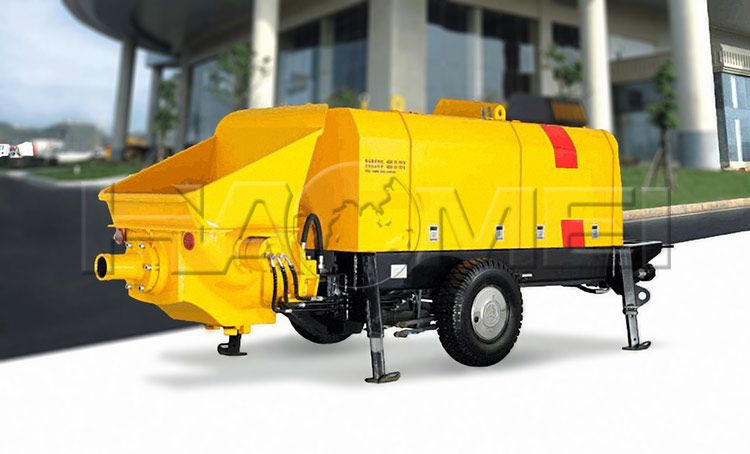
Concrete pump truck for sale
Small concrete boom pump
Small concrete boom pumps are designed to cope with narrow construction spaces and small construction projects. The boom length is usually between 15 meters and 25 meters, and the overall size is compact, which is convenient for flexible movement and operation in space-constrained sites.
For example, in scenes such as the renovation of old residential areas and the partial pouring of small commercial buildings, the small boom concrete pump truck can easily enter and show their strength.
In terms of pumping capacity, the maximum pumping volume of this type of pump truck is generally between 20 cubic meters and 50 cubic meters per hour, which can meet the concrete pouring needs of small projects.
Although its pumping height is relatively limited, it can also reach about 15 meters to 20 meters, which is enough to cope with the ground and middle-level construction of general multi-story buildings.
Short-boom concrete boom pumps
Short-boom concrete boom pumps have boom lengths ranging from approximately 28 to 38 meters, making them a popular choice for urban and rural construction, factory construction, and other applications.
For example, in rural construction, roads are generally narrow and winding. Short-boom pump trucks, with their compact dimensions and tight turning radius, can navigate these complex road conditions.
A 33-meter boom pump truck is typically around 9 meters long, has a short wheelbase, and a low minimum deployed height, providing excellent maneuverability and material placement flexibility in confined spaces.
In terms of pumping performance, short-boom pump trucks can deliver a maximum pumping capacity of 80 to 120 cubic meters per hour, with impressive pumping pressures. They can easily deliver concrete to heights of 30 to 40 meters, meeting the construction needs of most rural buildings and urban factories.
Long-Boom concrete boom pumps
Long-boom concrete boom pumps are the core of super-high-rise construction, with boom lengths often exceeding 50 meters, or even 100 meters or more. During skyscraper construction, long-boom pump trucks can deliver concrete directly to dozens or even hundreds of floors. For example, in the construction of landmark super-high-rise buildings, pump trucks with booms over 60 meters in length are highly effective.
Their pumping capacity is extremely powerful, reaching a maximum pumping volume of over 150 cubic meters per hour and a pumping pressure exceeding 40 MPa. They can deliver concrete vertically to heights of hundreds of meters, effectively ensuring an efficient and stable supply of concrete for super-high-rise construction, significantly improving construction efficiency and progress.
Concrete line pump
Small concrete line pump
Small concrete line pumps are widely used in small construction projects, indoor pouring, and other construction scenarios requiring smaller aggregate sizes. The common hbt20 concrete pump has a compact body, approximately 2.1 meters long, 0.8 meters wide, and 1.4 meters high. It weighs only 850 kilograms, making it easy to maneuver and deploy in confined spaces.
It can deliver concrete horizontally for distances of 100 to 150 meters and vertically up to 60 meters. Its delivery pipe, typically with an inner diameter of 80 mm, is suitable for pumping fine aggregate concrete with a particle size of less than 2 cm. Small pumps are highly efficient in projects such as small residential renovations and small structure construction.
Medium-sized concrete pump trailer
It offers higher power and greater conveying capacity. For example, the hbt60 concrete pump boasts a main motor power of up to 62 kW and a secondary motor power of 1.5 kW, providing powerful dual-motor operation.
Its horizontal conveying distance can reach 200 meters and its vertical conveying height can reach 90 meters. Its delivery pipes are typically larger in diameter, enabling it to pump gravel with a diameter of 1 to 5 cm.
This meets the needs of long-distance and high-altitude concrete conveying in general construction projects, such as commercial buildings and large residential projects. On the construction site, medium-sized pipeline pumps can reliably transport concrete from the mixing plant to various pouring locations, ensuring continuous construction.
Large concrete pump
Large concrete line pumps are essential equipment for ultra-large construction projects. These truck-mounted concrete pumps boast exceptional pumping capabilities, capable of delivering pressures of up to 48 MPa or higher.
After upgrades, they can pump concrete vertically to heights exceeding 800 meters, equivalent to the height of more than 200 buildings. In large-scale projects such as super-high-rise buildings and large bridges, large concrete pipeline pumps efficiently deliver large volumes of concrete to designated locations. Their robust pumping performance and stability are key factors in ensuring smooth project progress, providing solid support for the construction of large and complex building structures.
Original source: https://www.concretebatchplanthm.com/a/boom-concrete-pump-truck-vs-concrete-line-pump.html
订阅:
评论 (Atom)
Concrete Mixer Machine With Pump
Modern job sites need concrete placed faster, with fewer handling steps, and with more consistent quality. A concrete mixer machine with pu...
.jpg)
-
The portable concrete plant features good mobility, simple foundation and simple structure. What problems can be solved by purchasing ...
-
When the concrete quality is not qualified, the stationary batching plant has been always blamed. In fact, there are many reasons that a...
-
Good maintenance of the self loading concrete mixer truck can save fuel consumption and keep good performance of the engine. According...


