显示标签为“concrete mixer pump”的博文。显示所有博文

2026年7月28日星期二

Ready Mix Pump Truck VS Small Concrete Mixer Pump

In the field of concrete construction, choosing the right equipment can increase project efficiency by half and significantly reduce costs. Ready mix concrete pump trucks and small concrete mixing pumps are currently the two most commonly used pieces of equipment in construction, and many project managers often struggle with the choice when purchasing or renting them. What are the differences between them?
Ready mix concrete pump truck.jpg

I. Comparison of Core Functions

1. Ready-mixed concrete pump truck: Also known as a boom pump truck, it can only transport ready-mixed concrete and has no mixing capability, requiring a commercial concrete plant. Its hydraulic boom can flexibly extend and rotate, reaching a maximum length of tens of meters, allowing direct pouring over obstacles without the need for pipeline laying. The theoretical pumping capacity of conventional models is 50-100 m³/h, with stable continuous pumping, reducing cold joints during construction, and requiring only one operator. However, it has high requirements for concrete quality; segregation and substandard slump can easily clog the pipes.


2. Small concrete mixing pump: Integrates mixing and pumping, eliminating the need for a commercial concrete plant. It can directly pump qualified concrete after mixing raw materials such as sand, gravel, and cement on-site, achieving one-stop operation. It can adjust the mix ratio and slump according to needs, making it highly adaptable and even suitable for narrow spaces through pipeline installation. However, its efficiency is relatively low, with standard models having a pumping capacity of 20-60 m³/h, requiring 2-3 workers to complete the processes of feeding, mixing, and pumping.


II. Comparison of Applicable Projects

1. Ready-mixed concrete pump truck: Suitable for large-scale projects with high volume and efficiency requirements, such as the main structure pouring of large high-rise buildings, municipal bridges, roads, stadiums, large industrial plants, and commercial complexes.


These projects have open sites, facilitating boom deployment, and readily available ready-mixed concrete is readily available. However, it has strict site requirements; its advantages cannot be fully realized in narrow spaces or when ready-mixed concrete transportation is inconvenient.


2. Small concrete mixing pump: Primarily characterized by flexibility and self-sufficiency, suitable for small, remote, or site-restricted projects, such as rural self-built houses, town villas, small-scale municipal repairs, mountain roads, and small-scale water conservancy projects, as well as enclosed sites such as tunnels and basements.


These projects have small volumes, insufficient ready-mixed concrete coverage, or high transportation costs. The small size of the equipment and the ability to mix on-site can significantly reduce costs and avoid concrete waste.


III. Price Comparison

1. Ready-mixed concrete pump truck: High purchase cost. New 30-40 meter boom models cost $110,000-$280,000, high-end models exceed $400,000, and used ones cost $40,000-$140,000. Operating costs include ready-mixed concrete ($45-$75/m³), fuel ($30-$75/hour), professional operator salary ($1100-$1700/month), and annual maintenance costs of $3000-$7000. Rental fees are $110-$280 per day, suitable for short-term large-scale projects.


2. Small concrete mixer and pump: Affordable purchase price. New models cost $11,000-$42,000, and used ones cost $4000-$21,000. Low operating costs. On-site mixing materials are $15-$30 cheaper per m³ than ready-mixed concrete, fuel costs are $15-$45/hour, and it can be operated by ordinary workers ($700-$1100/month). Annual maintenance costs are $700-$2100. The daily rental fee is $40-$110, suitable for short-term use of small projects.

Original source: https://www.concrete-pump-cn.com/a/ready-mix-pump-truck-vs-small-concrete-mixer-and-pump.html

2026年7月15日星期三

How to Choose th Right Concrete Mixer Pump

 In small and medium-sized infrastructure projects, rural housing construction, flooring, and slope protection, concrete mixer pumps integrate on-site mixing and long-distance pumping, making them core construction equipment. Compared to pure delivery pumps, they have built-in mixing capabilities, eliminating the need for commercial concrete mixer trucks, resulting in greater mobility and lower costs.

However, many construction companies focus solely on price when selecting equipment, neglecting parameter matching. This can easily lead to problems such as weak pumping, pipe blockage, and difficulties in site access, resulting in project delays and increased maintenance costs. This article, combining engineering scenarios and core parameters, outlines a simplified selection method.

concrete mixer pumps.jpg

I. Determining Equipment Standards by Project Type

Prioritize clarifying the project attributes before selecting equipment to avoid overkill or underkill.

1. Small, scattered projects

For rural self-built houses, small courtyard flooring, septic tank pouring, etc., with a daily volume <50m³ and limited space, trailer-mounted small mixing pumps are preferred, as they are compact, easy to assemble and disassemble, and offer outstanding flexibility and cost-effectiveness.

2. Medium-sized conventional projects

For rural roads, multi-story residential buildings, slope spraying and anchoring, etc., with a daily volume of 50-150 m³ and moderate pouring distance, a standard forced-action mixing pump is selected, offering balanced mixing and pumping performance, supporting continuous field operations.

3. Large-scale, high-difficulty projects

For high-rise buildings, long-distance mountain slope protection, etc., with a daily volume >150 m³, requiring high lift and long-distance transport, a large-displacement, high-pressure mixing pump is selected. For complex scenarios, a boom structure can be used to reduce pipe laying difficulty.

II. Core Performance

1: Output Capacity, Matching Construction Efficiency

Output capacity is based on hourly delivery volume as the core indicator, combined with pumping pressure reference, directly determining pouring efficiency.

Small models (20-60 m³/h): Suitable for small-volume intermittent operations, low energy consumption, and quick return on investment, used for scattered agricultural construction projects.

Medium models (60-90 m³/h): Industry-standard models, balancing efficiency and flexibility, the mainstream choice for rural construction and road projects.

Large-scale models (90-150 m³/h): High pressure and large displacement, suitable for large-area simultaneous construction, but with higher self-weight, energy consumption, and procurement costs.

2: Pumping Pressure and Distance, Avoiding Blind Spots

Pipe blockage and insufficient feeding height are mostly caused by a mismatch between pressure and conveying distance. Elbows and flexible hoses increase conveying resistance; therefore, a margin of safety should be allowed when selecting a model.

Low-pressure models (60-80 bar): Vertical conveying ≤30m, horizontal conveying ≤200m, suitable for low-rise buildings and close-range floor pouring.

Medium-pressure models (80-160 bar): Vertical 30-60m, horizontal 200-500m, preferred for mid-rise buildings and long-distance conveying on slopes.

High-pressure models (16-32 MPa): Vertical >60m, horizontal >500m, suitable for high-rise buildings and ultra-long-distance conveying scenarios with multiple bends.

Practical Tips: A 90° bend increases the equivalent horizontal distance by 8-10m; vertical conveying reduces pumping capacity by 20%-30%, so it's recommended to add a 10%-20% pressure margin when selecting a pump.

3. Key Compatibility: Aggregate Particle Size, Preventing Pipe Blockage at the Source

Matching the aggregate particle size with the pipe diameter is crucial to preventing blockages.

Small Pump (100mm pipe diameter): Suitable for aggregates ≤20mm, only for fine aggregate concrete and mortar pouring.

Standard Pump (125mm pipe diameter): General specification, suitable for aggregates ≤31.5mm, meeting the needs of most civil engineering projects.

Large Diameter Pump (150mm pipe diameter): Suitable for aggregates ≤40mm, suitable for coarse aggregate concrete, dams, and other high-strength pouring.

Ⅲ. Scenarios Compatibility: Power Type, Matching On-Site Power Supply Conditions

Equipment is available in electric and diesel versions; neither is inherently superior, selection depends on the site's power supply conditions.

Electric concrete mixing pump: Low cost, low noise, low failure rate; relies on a stable three-phase power grid, suitable for long-term construction in urban areas and towns with power grids.

Diesel concrete mixer pump: No external power supply required, highly mobile; higher fuel costs; suitable for mountainous areas, remote construction sites without power grids, and temporary emergency repair projects.

Additional suggestion: For sites with unstable power supply, prioritize diesel-electric dual-fuel models to balance flexibility and economy.

Original source: https://www.concretebatchplanthm.com/a/how-to-choose-the-right-concrete-mixer-pump.html

2026年3月3日星期二

Concrete Mixer Machine With Pump

 Modern job sites need concrete placed faster, with fewer handling steps, and with more consistent quality. A concrete mixer machine with pump combines two core functions in one unit: it mixes fresh concrete on site and then pumps it directly to the pour area through a pipeline. This integrated approach reduces rehandling, lowers the risk of segregation during transfers, and helps crews keep a steady placing rhythm, especially where wheelbarrows or cranes slow the workflow.

concrete mixing pump trailer


How the mixer plus pump system works on site

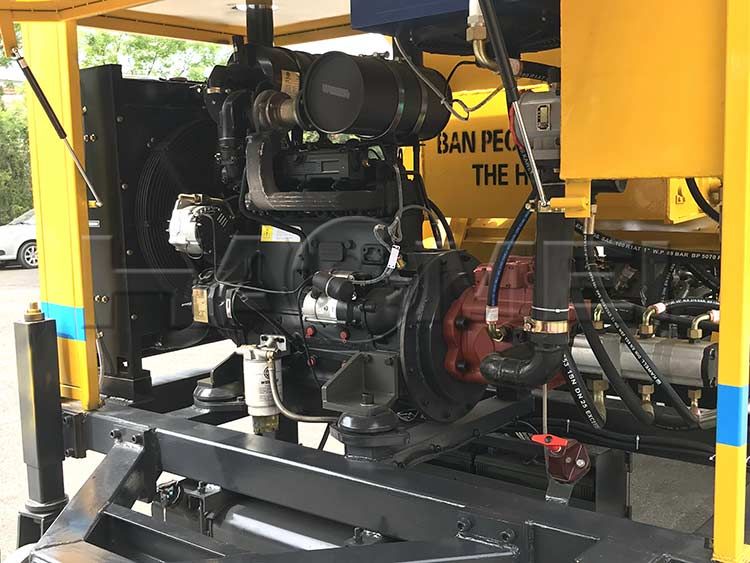
A combined mixing and pumping unit typically includes a loading hopper, a mixing drum or twin-shaft style mixer, a pumping system (often piston type), a distribution valve, and a pipeline connection. Materials are loaded into the hopper, mixed to the required consistency, then transferred into the pumping chamber. The pump pushes the concrete through steel pipes or rubber hoses to the target location.


For most applications, the key performance factors are output and pumpability. Output is influenced by mixing efficiency and pump displacement, while pumpability depends on the mix design, aggregate grading, and the pressure and friction losses in the line. When matching a unit to a project, check the maximum horizontal and vertical pumping distance, rated output in cubic meters per hour, and recommended aggregate size. In practice, stable pumping is achieved when the mix has enough mortar content to lubricate the line while maintaining the specified strength.


If your projects frequently require pumping from one compact footprint, a dedicated Concrete Mixing Pump configuration can be a practical way to streamline both material handling and placement.

Where it fits best: applications and productivity advantages

This equipment is widely used for residential construction, small to mid sized commercial jobs, rural infrastructure, foundations, slabs, and repair works where ready mix logistics are difficult or where placing conditions are tight. It is also valuable on sites with limited crane access or where labor availability is constrained.

Practical advantages that matter to construction equipment purchasers include:


  • Faster cycle time: mixing and pumping are coordinated, reducing idle time between batches.
  • Lower labor intensity: less manual transport and fewer transfer points.
  • Better placement control: steady flow supports more uniform consolidation and finishing.
  • Flexible access: pipelines can route around obstacles and deliver to elevated or enclosed areas.


Market demand has been moving toward compact, trailer mounted, and easy transport models, with greater attention on fuel efficiency, wear parts life, and simplified maintenance access. Many contractors also prefer machines that can handle a wider range of mixes, from standard C20 to higher grades, as long as aggregate size and slump remain within the pumpable range.

Further reading: https://www.concrete-pump-cn.com/a/concrete-mixer-machine-with-pump.html

2025年8月6日星期三

Is A Concrete Mixer and Pumping Machine Cheap

 In modern construction, the transportation and mixing of concrete are crucial processes. Concrete mixer and pumping machine, which combine both mixing and pumping functions, are gradually gaining market recognition. Compared to other types of concrete pumps, they offer unique economic advantages and are widely used in many countries around the world.

 Concrete mixer and pumping machine.jpg

Significant Price Advantage

1. Low Initial Purchase Cost

Traditional concrete pumps, such as the common large concrete pump trucks, are often prohibitively expensive. Large concrete pump trucks, due to their complex boom systems, high-end chassis configurations, and advanced pumping technology, typically cost between $300,000 and $1.5 million, or even more.

Concrete mixer pumps, however, offer significant advantages in terms of purchase cost due to their integrated functionality and design. Typical prices for small concrete mixer pumps range from $10,000 to $100,000, with some simpler models costing as little as $10,000 to $50,000.

For many small construction companies, rural housing construction teams, or entrepreneurs with limited funds, this significantly lowers the barrier to entry and reduces the initial capital investment.

2. Equipment Integration Saves Overall Costs

A concrete mixer pump combines mixing and pumping functions into one unit, eliminating the need to purchase separate concrete mixers and concrete pumps, as is the case with traditional construction methods.

A typical small concrete mixer costs approximately $1,000 to $10,000, while a small concrete pump ranges from $10,000 to $100,000. Purchasing these separately not only increases equipment costs but also requires additional expenses such as transportation, installation, and commissioning.

A single concrete mixer pump performs both mixing and pumping, reducing not only the capital investment but also the complex transportation and installation processes and costs associated with purchasing multiple units, further lowering overall costs.

Functional Advantages

1. Efficient construction reduces construction time and costs

Concrete mixer pumps typically achieve several times the efficiency of traditional stationary mixers and concrete pumps. In construction, time is money. Concrete mixer pumps can be flexibly and quickly moved between different construction sites or multiple construction sites on the same site, allowing for short-distance piping and short-distance connections.

This significantly reduces construction time and piping installation time, enabling more frequent equipment use. On a small construction project, concrete mixing might take months using traditional equipment, but using a concrete mixer pump can take half the time or even less, significantly shortening the construction period and reducing overall expenses such as labor costs and equipment rental.

2. Streamlining manpower reduces labor cost

Traditional concrete mixing and pumping operations require the coordinated efforts of multiple personnel, typically requiring at least three to five operators. Concrete mixing pumps are highly automated, allowing a single operator to perform both the mixing and pumping processes. With labor costs rising, this undoubtedly saves considerable labor costs. Assuming a 25-day construction month and a daily wage of $50 per person, using a concrete mixing pump can save labor costs of (3 - 1) × 50 × 25 = $2,500 per month. Over the long term, this labor cost savings is substantial.

3. Energy-saving design

Concrete mixer pumps are designed with energy efficiency in mind, typically using less power than the combined power of a traditional mixer and concrete pump. In rural areas or areas with limited electricity, low energy consumption not only reduces electricity costs but also prevents construction interruptions caused by power shortages. For example, if a project requires continuous equipment use for three months, operating eight hours per day at a cost of $0.15 per kilowatt-hour, the electricity savings from using a concrete mixer pump compared to traditional equipment (calculated based on a 30kW total power difference) would be: 30 x 8 x 30 x 3 x 0.15 = $3,240.

Widespread Global Application

1. Europe and the United States

In Europe and the United States, concrete mixer pumps are widely used in small construction projects, renovation projects, and rural areas. The European and American construction market places high demands on equipment efficiency, flexibility, and environmental friendliness, and concrete mixer pumps precisely meet these requirements. Their efficient construction capacity shortens construction periods and reduces environmental impact. Their low energy consumption also aligns with the region's pursuit of energy conservation and environmental protection. In some small municipal projects and private residential construction, concrete mixer pumps, with their advantages, enable efficient and convenient concrete construction.

2. Asia

China: In China, concrete mixer pumps are widely used in rural self-built homes, small commercial buildings in rural areas, and some small infrastructure projects due to their affordable price, ease of operation, and efficient construction. In mountainous areas or areas with limited access, concrete mixer pumps can mix and pump concrete directly on-site, solving the problem of concrete transportation.

Pakistan: In Pakistan, concrete mixer pumps, thanks to their versatility, are increasingly gaining prominence in various construction projects, meeting the needs of local construction projects of varying scales and contributing to Pakistan's urban development and infrastructure improvements.

Southeast Asian Countries: Southeast Asian countries such as Vietnam and Indonesia are undergoing rapid urbanization, with a large number of residential, commercial, and infrastructure projects underway. Concrete mixer pumps are favored by local construction companies for their cost-effectiveness and flexible construction capabilities. On smaller construction sites, concrete mixer pumps can be quickly deployed to mix and pump concrete, improving efficiency and reducing costs.

3. Africa

Africa faces enormous demand for infrastructure development. Concrete mixer pumps are being used in road construction, housing construction, and water conservancy facility construction in countries like Senegal, Ethiopia, and Zimbabwe. Construction projects in these countries often face challenges such as limited funding and complex construction conditions. Concrete mixer pumps, with their relatively low price and adaptability to diverse working conditions, are a valuable aid in local construction efforts. For example, in rural areas of Ethiopia, concrete mixer pumps are being used to construct public buildings such as schools and clinics, providing strong support for local infrastructure development. Welcome to inquire this cheap concrete pump from us directly.

Original source: https://www.concrete-pump-cn.com/a/is-a-concrete-mixer-and-pumping-machine-cheap.html

2023年1月16日星期一

The Pros and Cons of JBT30 Concrete Mixer Pump

 The trailer concrete mixer pump is usually used in the transportation of large aggregate concrete such as small and medium-sized projects like high-rise buildings, tunnel, water conservancy and hydropower engineering, geological disaster slope treatment, etc.

Due to the high-performance structure and system configuration of the concrete mixing pump, the reliability of the machine has got greatly improved, which can ensure zero failure in pumping during construction. Therefore, even under harsh conditions, it is of stable pumping performance.

trailer concrete mixer pump.jpg

ADVANTAGES:

1. It is relatively cheap compared with the total cost of buying concrete mixer and concrete pumps. The concrete mixing pump has two in one.

2. During the construction, the construction efficiency of the concrete mixing pump is very high. It can carry out on-site mixing and continuous pumping. Compared with traditional mixer mixing and manual feeding, the efficiency is increased by more than 5 times.

3. It saves labor during the operation and significantly reduces the cost of use. The whole process can be operated by one person with a high degree of automation. Compared with concrete mixer and manual feeding, it can save 4-5 labors.

4. The concrete mixer and pump is light, small in size and easy to move, which is very suitable for construction in rural areas and narrow areas.

5. The concrete produced by the concrete mixer pump is very good. Usually, the concrete produced by the concrete mixer pump needs to be mixed twice, which is more uniform, has better compactness, higher strength, and better impermeability and flexural resistance.

DISADVANTAGES

1. It takes a long time and a lot of work to prepare for laying pipelines.

2. As the pouring position changes, the placement point must be manually moved.

3. JBT 30 concrete mixer with pump does not have a motorized walking mechanism, so it needs to be dragged, and the moving speed is slow.

4. It is necessary to tow the supporting construction components during the transition: generator sets, trailer pump, pipelines, forklifts, rotating brackets and other tools. There are many mobile supporting equipment, which is not flexible enough.

Original source: https://www.concretebatchplanthm.com/a/the-pros-and-cons-of-jbt30-concrete-mixer-pump.html

2020年11月24日星期二

What Are Applications of Small Concrete Mixer and Pump

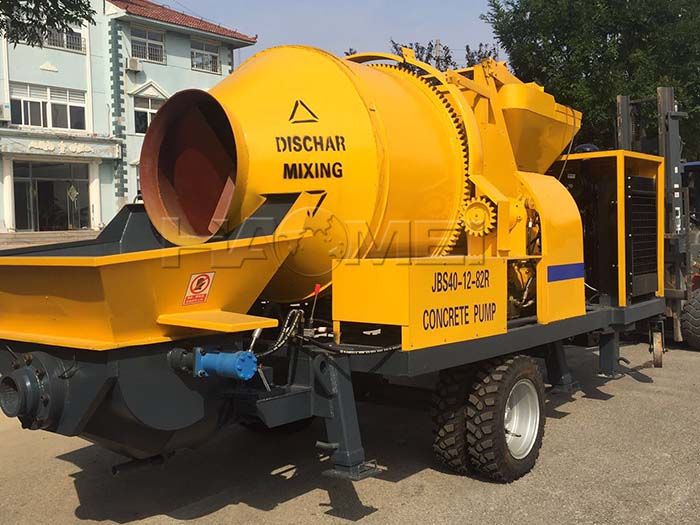
 The concrete mixer pump is a kind of trailer pump for sale, integrating feeding, mixing and high-pressure pumping. It can realize on-site mixing and continuous pumping, which greatly improves construction efficiency. It is an ideal choice the house building in rural areas.

1.jpg

Its construction efficiency is 4-6 times that of ordinary concrete pumps. The quality of concrete mixed by the twin-shaft mixing system can reach the level of commercial concrete. The concrete mixing pump has two kinds: diesel and electric model.

In the case of sufficient power supply, it can be connected to the grid to use electricity to drive, which can reduce fuel consumption while saving energy and environmental protection; in the case of insufficient power supply, it can be driven by diesel, and it can work normally without access to electricity.

The small concrete mixer and pump is widely used in secondary urban construction, rural house construction, villa group construction, small water conservancy projects, bridge construction and tunnel construction.

It is specially used in rural areas. Through mixing and pumping, the concrete is poured at a fast speed. Mixing and pumping can be done by one person. It saves labor and is less labor-intensive. In rural areas, most of them are flat-roofed houses with reinforced concrete, which is very suitable to use a mixing pump. It is absolutely labor-saving when pouring. A 200-square-meter roof was poured in less than two hours. Welcome to leave message below to get a quote.

Original source: https://www.haomei-machinery.com/a/what-are-applications-of-small-concrete-mixer-and-pump.html

2020年5月14日星期四

JBS40 Concrete Mixer Pump Working in Indonesia


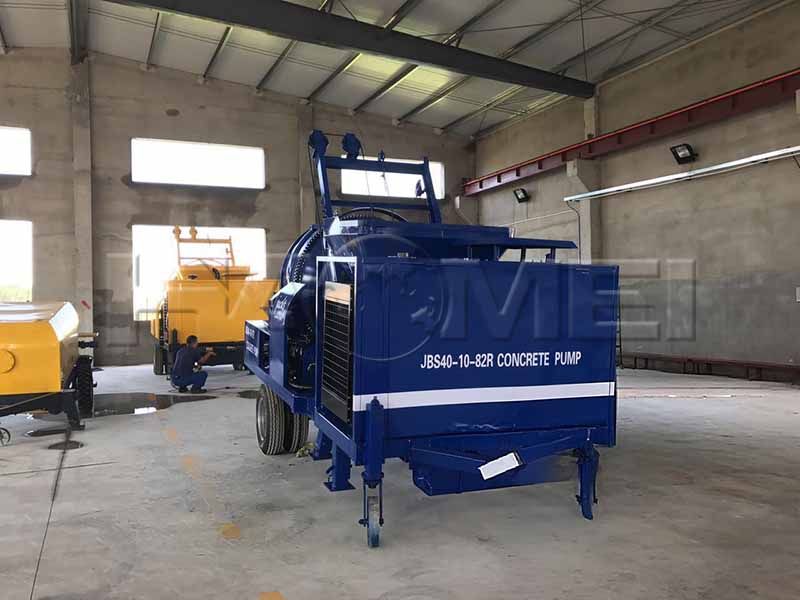
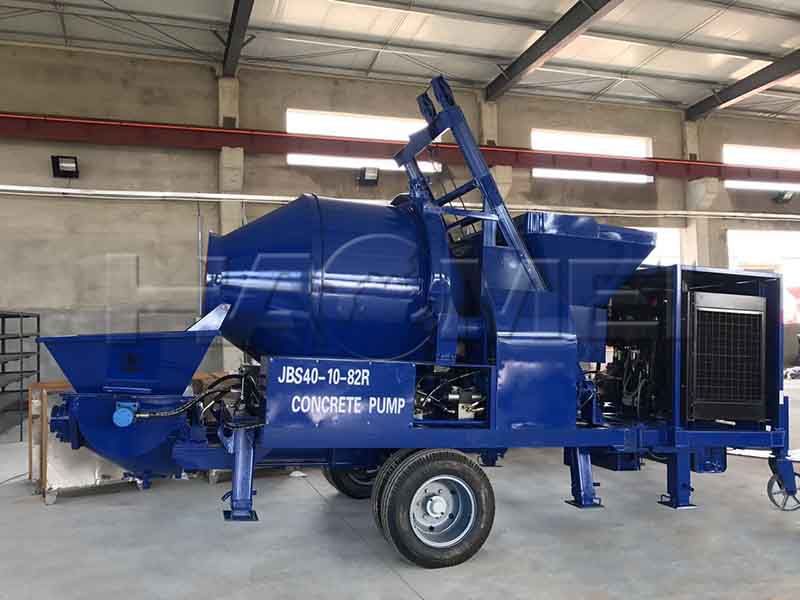
With two functions of mixing and pumping in one, concrete mixer pump is very popular in Southeas Aisa, Africa, America,etc. It is an econmoic choice for most small and medium construction contractors. Welcome to visit the details at https://www.concretebatchplanthm.com/product/jbs40-10-82r-concrete-mixing-pump.html or send inquiry to feedom@haomei-machinery.com

2020年5月9日星期六

JBS40 Diesel Concrete Mixer Pump Working in Africa


Haomei concrete mixer pump has two functions of concret mixing and pumping in one. It features less cost and higher efficiency. The whole working process is smooth and short. This is its working video provided by our Africa customer. If you like to know more, welcome to visit: https://www.concretebatchplanthm.com/product/jbs40-10-82r-concrete-mixing-pump.html or send inquiry to feedom@haomei-machinery.com

3.5 m3 Self Loading Concrete Mixer Truck

  Recent English Q&A discussions on Quora, Google, Reddit-style forums, and construction equipment communities show steady interest in t...