2025年10月20日星期一

What Is The Application Scope of 1.8m3 Self Loading Concrete Mixer

 In the concrete construction industry, not all projects require large-scale concrete equipment. For these applications, a 1.8 m3 self loading concrete mixer is a must-have. It solves the problem of material supply difficulties and avoids the awkwardness of overkill, maximizing efficiency and cost-effectiveness.
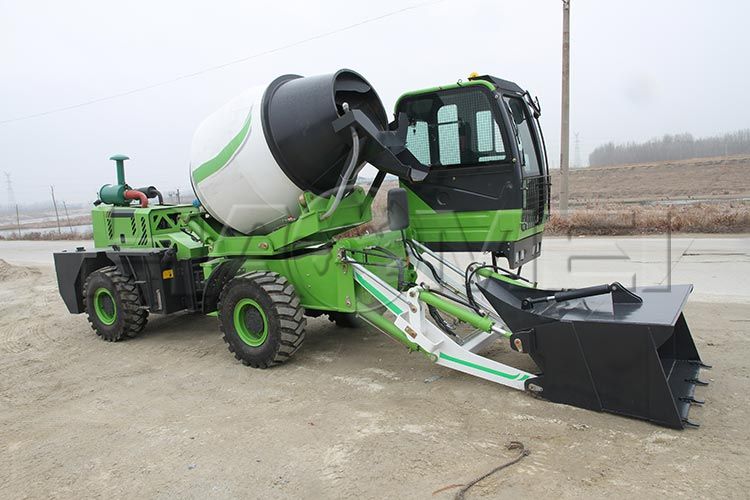
 self loading concrete mixer.jpg

1. Rural self-built houses/small residential construction

Rural house construction often faces two major challenges: One hand, village roads are narrow (mostly 3-4 meters wide), making it impossible for mixer trucks larger than 6 cubic meters to enter; on the other hand, the amount of material used is scattered—casting a single floor requires over 10 cubic meters of material, delivered in 3-4 batches, each batch containing just enough material to fit the 1.8m³ volume.

This vehicle has a compact body (most have a wheelbase of less than 3.5 meters), making it easy to navigate rural alleys. It also features a built-in bucket loading system: no separate loader is needed; the driver can operate the bucket to scoop sand and gravel, automatically mix and add water, and then unload the mix directly at the pouring site. This is three times more efficient than manual mixing and avoids sand and gravel waste.

2. Small municipal repair projects

Projects like hardening the base after renovating sidewalk tiles, pouring concrete around sewer manholes, and hardening walkways in residential green belts typically only require 2-5 cubic meters of concrete per project. Using a large tanker truck not only requires waiting for dispatch but also incurs "idle driving fees," making it extremely cost-effective.

A 1.8m³ self-loading truck is readily available. For example, repairing a 10-meter-long sidewalk base can mix 1.8 cubic meters at a time, completing the job in 2-3 trips. Furthermore, it can stop close to the work site, eliminating the need for wheelbarrows to transport concrete, saving labor and reducing aggregate segregation.

3. On-site secondary structure construction

On construction sites, "secondary structures" such as structural columns, lintels, and post-cast joints often only require a single pour of 0.5-2 cubic meters, but they require continuous material supply (for example, if a floor has 10 structural columns, they must be poured one by one).

Large mixer trucks deliver 6 cubic meters at a time, and by the time the first few are poured, the remaining concrete is almost setting. A 1.8-meter-capacity truck, however, can mix on demand, delivering just enough for one or two structural columns. This ensures fresh concrete and eliminates the need for frequent tank cleaning.

4. Emergency rescue projects

Road pothole repairs, concrete sealing after pipe leaks, and anti-seepage repairs on small embankments require speed—by the time a large tanker truck is contacted, the repair window may have already passed.

1.8m³ self-loading concrete mixer trucks can be driven directly to the emergency site, quickly mixing materials (such as nearby sand and gravel) on-site. For example, patching a 2-meter-wide pothole can be completed in half an hour, saving at least two hours compared to traditional processes.

Why are 1.8m³ trucks so popular with small projects?

Besides being suitable for specific scenarios, the 1.8m³ size also addresses the core needs of small projects:

Cost savings: There is no need to hire a loader driver (for self-loading) or bear the high freight costs of a large tanker truck. One truck replaces three workers (mixing, transporting, and unloading).

Easy to operate: Many models feature one-touch mixing and automatic unloading functions, allowing ordinary truck drivers to master them in just half a day of training, eliminating the need for professional mixer truck drivers.

No waste: Small projects often worry about "leftover material." 1.8m³ is just enough for a small application. Even a small amount can be used for subsequent repairs, unlike large tanker trucks, which often have 3-4 cubic meters of material left over and have to be dumped. Welcome to buy factory price self loader concrete mixer from us.

Original Source: https://www.self-loading-mixer.com/a/what-is-the-application-scope-of-18m3-self-loading-concrete-mixer.html

Will You Choose Concrete Pump Tow Behiend

In the construction industry, concrete pouring is a core process, and the choice of equipment directly impacts project progress, quality, and cost. After comparing various equipment options, many construction teams ultimately choose a concrete pump tow behind. What makes it so preferred?

1. Efficient pouring

The bottleneck in concrete pouring often lies in the "transportation" stage. Traditional concrete trucks, which unload directly, are only suitable for pouring on flat ground and at short distances. However, when faced with situations requiring crossing obstacles, pouring at high-rise buildings, or long-distance transport, unloading becomes difficult and spreading becomes slow. The concrete pump trailer overcomes these limitations:

It is equipped with high-strength conveying pipes that can be flexibly spliced according to construction needs. Its horizontal conveying distance can reach 100-300 meters, and its vertical conveying height can reach buildings over 10 stories. Even within construction sites with obstacles such as walls, foundation pits, and equipment stacks, the pipes can precisely deliver concrete to the pouring site.

Crucially, trailer-mounted concrete pumps offer a stable delivery rate. Conventional models can deliver 30-80 cubic meters of concrete per hour. Furthermore, they minimize concrete slump loss during pouring, reducing construction joints caused by untimely delivery. This not only ensures pouring quality but also compresses a pouring task that originally took 2-3 days to just one day, significantly shortening the project timeline.


2. Controllable costs

For construction teams, "reducing costs and increasing efficiency" is a constant pursuit. The cost-effectiveness of trailer-mounted concrete pumps makes them an ideal choice for small and medium-sized projects:

In terms of equipment investment, the purchase cost of a trailer-mounted concrete pump is significantly lower than that of a concrete pump truck (boom pump), and there are no costs associated with boom maintenance or the high maintenance of the hydraulic system. For teams with an annual construction volume of less than 10,000 cubic meters, the cost of a trailer-mounted pump can be recovered within one or two projects. If renting a trailer-mounted pump, the daily rental cost is only 1/3 to 1/2 that of a truck-mounted pump, significantly reducing the initial financial burden.

In terms of labor and auxiliary costs, trailer-mounted concrete pumps are simple to operate. A single operator can complete equipment commissioning and operation, eliminating the need for additional boom operators. Furthermore, trailer-mounted concrete pumps have low construction site requirements, eliminating the need for reserved space for large equipment and clearing obstacles for the boom truck deployment, indirectly reducing the labor and time costs associated with site preparation.

3. Flexible adaptability

Construction scenarios are complex and diverse, ranging from confined indoor reinforcement to expansive outdoor pouring, and from standard C30 concrete to high-grade, large-aggregate concrete. These requirements place extremely high demands on equipment adaptability. The flexibility of a trailer-mounted concrete pump precisely meets these diverse needs:

In terms of site adaptability, trailer-mounted pumps are compact (typical models are approximately 5 meters long and 2 meters wide), allowing them to fit through narrow construction corridors into indoor spaces, basements, and urban village construction sites. They can even be disassembled and transported via elevator to high-rise floors for pouring, a feat impossible with bulky truck-mounted pumps.

In terms of concrete compatibility, high-quality trailer-mounted pumps are equipped with large-diameter delivery cylinders and wear-resistant pipes, capable of transporting concrete with aggregate sizes up to 80 mm. Whether it's standard commercial concrete, self-mixed concrete, or special concrete with admixtures, they deliver stable delivery with minimal pipe blockage.

Furthermore, trailer-mounted pumps can be used with concrete placing booms, whose 360-degree rotation enables uniform distribution over a wide area, further enhancing pouring flexibility.

4. Easy maintenance + high durability

The reliability of construction equipment directly impacts project progress. Equipment failure can cause concrete to set, delay construction, and result in significant losses. The portable concrete line pump, on the other hand, feature a relatively simple structure. Core components (such as the delivery cylinder, hydraulic pump, and motor) utilize proven technology, resulting in a low failure rate and easy maintenance.

For routine maintenance, operators only need to check the hydraulic oil level, clean the filter, and lubricate key components as required, eliminating the need for complex specialized procedures. In the event of minor malfunctions, replacement parts are readily available and affordable, allowing ordinary maintenance personnel to complete the replacement. This eliminates the need for specialized manufacturers and the long wait times associated with pump truck repairs.

In terms of durability, high-quality trailer pumps feature pipes made of high-chromium alloy, which is highly wear-resistant and has a service life of 10,000-20,000 cubic meters. The hydraulic system utilizes closed-loop control, reducing pressure loss and extending the life of hydraulic components. Many construction teams report that a properly maintained trailer pump can provide stable service for 5-8 years, providing reliable support for long-term construction.


Original source: https://www.concrete-pump-cn.com/a/will-you-choose-concrete-pump-tow-behind.html

What Are Features of The Bolted Cement Storage Silo

 In construction, infrastructure, and other engineering fields, cement storage is crucial for ensuring construction efficiency. The bolted cement storage silos, with its flexibility and practicality, is becoming the preferred equipment for many projects.

Core Features of bolted Cement Silos

1. Convenient transportation

Traditional concrete storage silos are large and heavy, placing stringent requirements on road width and bridge load-bearing capacity for transportation. This is particularly challenging in narrow locations like mountainous areas and rural areas.

concrete storage silos.jpg

Bolted cement silos, on the other hand, feature a modular design and can be disassembled into multiple components, including the silo body, support structure, feed port, and discharge system. Each component is compact and lightweight, making it easy to transport using ordinary trucks, navigating complex road conditions and significantly reducing transportation costs and complexity.

2. Flexible Installation

Bolted cement silos eliminate the need for large lifting equipment. Assembly can be completed manually with a small crane, and can be completed by a team of two to three people in one to two days. Whether used for short-term construction sites or for permanent storage on long-term projects, they can be quickly put into operation. Disassembly is also easy, allowing for quick transfer to the next site after a project is completed. This ensures high reuse rates and reduces idle equipment waste.

3. Safe storage

Cement is sensitive to moisture and contamination, so our bolted cement silos feature exceptional sealing. The silo is welded from high-quality steel plates, with joints sealed with sealant. Equipped with a rainproof roof and moisture-proof discharge valve, it effectively isolates rainwater, moisture, and impurities.

Our cement silos are also equipped with a material level monitoring device, which uses sensors to display the remaining cement in real time. This device also prevents cement from agglomerating due to long-term accumulation, ensuring storage quality.

4. Environmentally Friendly Design

Currently, environmental protection requirements for construction projects are becoming increasingly stringent, and our bolted cement silos incorporate environmentally friendly concepts into their design. The silo roof is equipped with a pulse dust removal device, which quickly absorbs dust as cement enters the silo via the screw conveyor, reducing dust pollution.

5. Strong adaptability

Bolted cement silos can store not only cement but also dry powders such as fly ash, mineral powder, and stone powder, making them suitable for a variety of applications, including concrete batching plants and dry mortar production lines.

Storage capacity can be flexibly adjusted to meet specific needs, ranging from a small 20 cubic meter to a large 100 cubic meter. Whether it's a small civil construction project or a large infrastructure project, there's a suitable model.

Specifications

1. Capacity

Capacity is the key parameter that determines storage capacity. The bolted cement storage silo for sale typically have a capacity range of 20-100 cubic meters.

20-30 cubic meters: It is suitable for short-term, low-volume projects such as small construction sites and rural self-built houses. A single silo can store 15-22 tons of cement (calculated at a cement density of 1.3-1.4 tons/cubic meter).

50-80 cubic meters: It is suitable for medium-sized concrete mixing plants and municipal projects, with a single silo storage capacity of 35-112 tons, meeting the needs of multiple teams working simultaneously.

100 cubic meters: For large-scale infrastructure projects (such as highway and bridge construction), a single silo can store up to 130-140 tons, reducing frequent material loading and improving construction efficiency.

2. Silo Size

Diameter: It commonly ranges from 2.5 to 4.5 meters. Smaller diameters reduce site width requirements and are suitable for narrow sites. Larger diameters provide more uniform storage space within the silo, reducing dead corners where cement can accumulate.

Height: When disassembled, the height of a single section typically does not exceed 3 meters (for easy transportation). When assembled, the total height is 5-10 meters. The specific height should be determined based on the site's vertical space and the installation requirements of the feed and discharge equipment.

3. Material and Thickness

The main silo body is typically constructed of Q235B steel plate, a high-strength, wear-resistant material that can withstand long-term storage pressure and outdoor weathering. Steel plate thickness varies depending on volume.

4. Supporting Equipment Specifications

Feed System: Typically equipped with a screw conveyor with a diameter of 160-219mm, with a conveying capacity of 20-50 tons/hour, adjustable based on cement usage.

Dust Removal Equipment: Pulse dust collectors have a filtration area of 3-8 square meters and a filtration efficiency exceeding 99%, effectively controlling dust emissions.

Level Meters: They are available in paddle and ultrasonic types, with a measurement range of 0-10 meters and an accuracy of ±5%, providing real-time feedback on the remaining material in the cement silo.

Original source: https://www.concretebatchplanthm.com/a/what-are-features-of-the-bolted-cement-storage-silo.html

2025年10月14日星期二

How Does A Self Loading Concrete Mixer Truck Work

The self loading concrete mixer truck is widely used in a wide range of small and medium projects like ground hardening, house and road building, bridge building and other infrastructure projects. Our control system is in English, easy for you to understand and operate. Welcome to send inquiry to feedom@haomei-machinery.com or learn more details at https://www.self-loading-mixer.com/

2025 Haomei Machinery at PhilConstruct Exhibition #construction #exhibit...

Every year, Haomei Machinery will attend the main international construction exhibitions world wide like Philippines, UAE, Indonesia,etc. We...