2025年6月4日星期三

Do You Need A Portable Concrete Pumping Machine

In modern construction, the portable concrete pumping machine has become indispensable core equipment with its high efficiency and flexibility. As the "mobile heart" in the field of concrete delivery, it not only reshapes the traditional construction mode, but also drives the industry towards intelligent and green development.

Mobile concrete pumps are mainly divided into three categories: boom pumps, vehicle-mounted pumps and trailer pumps. The concrete boom pump combines the pumping system with the folding boom by virtue of its integrated design. It can realize 360 degree rotating material distribution through hydraulic control, and can complete high-altitude operations without laying pipes. It is especially suitable for complex terrain and narrow spaces.

The vehicle-mounted pump relies on the vehicle chassis to achieve rapid transfer and transports concrete through external pipes, which is both flexible and economical. Although the trailer pump needs to be moved by a tractor, it is still widely used in small and medium-sized projects due to its simple structure and low cost.

As a representative of medium-sized boom pumps, the 38-meter boom pump integrates a number of innovative technologies:

Efficient pumping system

Adopting double-pump confluence closed hydraulic drive technology, the theoretical pumping displacement can reach 120-170m³/h, and the outlet pressure can reach up to 15MPa, which can meet the long-distance transportation needs of C60 high-grade concrete. For example, the Haomei boom pump can achieve precise material distribution by steplessly adjusting the pumping volume and boom extension speed.

Energy saving and environmental protection

Some models adopt the dual drive mode of diesel engine and motor, and switch to electric drive when the mains power is sufficient, reducing fuel consumption by more than 30%.


Application scenarios of 38-meter boom pump

38 meter concrete pump can cover the concrete pouring of 12-15-story buildings, especially suitable for projects such as urban complexes and residential buildings. Bridge and tunnel engineering

During the pouring of bridge piers and tunnel lining construction, its flexible boom can accurately cover complex structures. With its 38-meter vertical height and stable pumping performance, Haomei Machinery’s concrete pump truck has become one of the preferred equipment for bridge construction.

Original source: https://www.concrete-pump-cn.com/a/do-you-need-a-portable-concrete-pumping-machine.html

2025年6月3日星期二

RMC Wet Mix Batching Plant

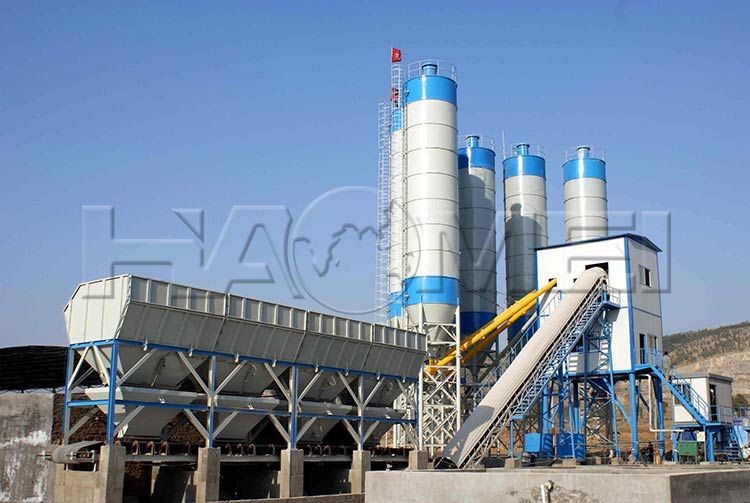
 In the construction industry, concrete is an indispensable basic material. As an advanced concrete production facility, RMC plant is increasingly being used.

RMC plant.jpg

Features of stationary RMC plant

High-quality products

Wet premixed concrete plants use centralized mixing methods to accurately measure and fully mix raw materials. All ingredients (including cement, aggregates, water, and admixtures, etc.) are mixed in a central mixer according to a strict mix ratio to ensure the uniformity and stability of the concrete, thereby producing high-quality concrete products and effectively ensuring the quality of the construction project.

High production efficiency

This type of mixing station is equipped with advanced automation equipment, from the feeding and metering of raw materials to mixing and unloading, the entire production process can achieve efficient and continuous operation. In addition, the mixing host has a fast mixing speed and good mixing effect, which greatly shortens the production time of each batch of concrete and can meet the large demand for concrete in large-scale engineering construction.

Excellent environmental protection performance

In terms of environmental protection, wet concrete batching plants have taken a series of effective measures. The mixing host and material conveying system are usually closed, which reduces the flying of dust and reduces the pollution to the surrounding environment. At the same time, there are corresponding treatment equipment for wastewater and waste residue generated during the production process, which realizes the recycling of resources and the discharge of waste in compliance with the current development concept of green buildings.

Good adaptability

Wet premixed concrete plants can adapt to the use of a variety of raw materials. Whether it is ordinary sand and gravel aggregates or some special materials, they can be accurately mixed according to different mix ratio requirements to produce concrete that meets various engineering needs.

Suitable concrete types for production

Ordinary structural concrete

This is the most common type of concrete, which is widely used in the foundation, beams, slabs, columns and other structural parts of various buildings. With its precise metering and good mixing performance, the wet mix batching plant can stably produce ordinary structural concrete of different strength grades, such as C20, C25, C30, etc., which provides reliable guarantee for the stability of the building structure.

High-performance concrete

With the continuous development of construction technology, the requirements for concrete performance are getting higher and higher. The wet premixed concrete plant can produce high-performance concrete with high strength, high durability and high workability by reasonably selecting high-quality raw materials and accurately controlling the dosage of admixtures. This kind of concrete is suitable for some important projects with high requirements for structural performance and service life, such as large bridges and the bottom structure of high-rise buildings.

Special concrete

Waterproof concrete: Waterproof concrete is indispensable in some projects that require waterproof functions, such as basements, pools, tunnels, etc. Wet batching concrete plants can produce waterproof concrete with good anti-seepage performance by adjusting the mix ratio and adding appropriate amounts of waterproofing agents, effectively preventing leakage of groundwater or other water sources.

Massive concrete: For large-volume concrete projects such as large foundations and dams, concrete is required to have low hydration heat and good crack resistance. Wet concrete plants can produce products that meet the requirements of large-volume concrete construction by optimizing raw material selection and mix ratio design, such as using low-heat cement and increasing the amount of mineral admixtures, and reduce the risk of cracks in the concrete due to excessive hydration heat.

Colored concrete: In order to meet the decorative needs of the exterior of buildings, colored concrete is becoming more and more popular. Wet mix batching plants can add appropriate pigments during the mixing process, accurately control the amount of pigment added, and produce uniform and bright colored concrete for paving projects such as squares, sidewalks, and garden landscapes, adding to the beauty of the building environment.

Original source: https://www.concretebatchplanthm.com/a/rmc-wet-mix-batching-plant.html

2025年4月2日星期三

What Will Sicoma Twin Shaft Mixer Bring to HZS25 Concrete Batching Plant

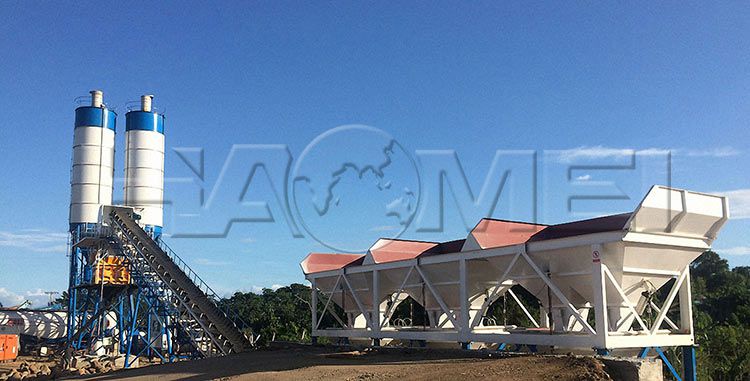
 In the construction industry, the choice of concrete mixing plant directly affects the efficiency and cost of the project. In recent years, small concrete batch plants have gradually become the new favorite of the market with their unique advantages. Taking hzs25 concrete batching plant as an example, this type of equipment is not only suitable for small and medium-sized projects, but also achieves efficient production in a compact body through technological innovation.

HZS25 concrete mixing plant .jpg

1. HZS25 concrete plant

As a typical small concrete mixing plant, HZS25 concrete mixing plant has a theoretical productivity of up to 25 cubic meters per hour. It is equipped with a JS500 twin-shaft mixer and can efficiently process various types of concrete, such as dry hard concrete and lightweight aggregate. Its design fully reflects the five core advantages of small mixing plants:

Space and mobility

The compact modular structure makes it occupy less than 1/3 of the floor space of traditional equipment, which is especially suitable for urban construction sites or narrow working environments. At the same time, the equipment can be quickly disassembled and assembled, which is convenient for transfer and significantly reduces transportation costs.

Rapid deployment and low energy consumption

The installation cycle of HZS25 is as short as a few days, which can quickly respond to urgent project needs. Its total power is only about 12.5 kW/h, which is 30% energy-saving than similar equipment and conforms to the trend of green construction.

Cost and flexibility

The initial investment is 40%-60% lower than that of medium-sized equipment, and it is easy to maintain and the cost of accessories is affordable. The modular design supports users to customize the configuration according to their needs, such as adding an automatic control system or upgrading a metering device.

2. Common twin shaft mixer VS Sicoma twin shaft mixer

As the core component of the mixing station, the concrete mixer directly determines the quality of concrete and the life of the equipment. There are significant differences in performance and cost between the mainstream ordinary twin-shaft mixers and SICOMA mixers in the current market:

Comparison dimensions

Ordinary twin-shaft mixer

Sicoma mixer

Seal and durability

Single shaft end seal, easy to wear

Multiple seals + air purge technology, strong anti-leakage ability

Intelligent configuration

Basic manual lubrication system

Optional electric lubrication pump and real-time monitoring system

Mixing efficiency

Medium mixing uniformity, suitable for conventional concrete

Double-shaft forced mixing, suitable for dry hard and high-strength concrete

Maintenance cost

Spare parts are cheap, but the failure rate is high

Original parts are expensive, but the operation is stable

Applicable scenarios

Small and medium-sized projects, budget-sensitive customers

Large projects, projects with strict quality requirements

3. The technical premium behind the price

Equipment cost is a key factor in customer decision-making. The overall price of HZS25 is significantly affected by the type of concrete mixer:

Ordinary twin-shaft mixer

The cost is low (about 30%-40% of the total equipment price), suitable for small and medium-sized enterprises with limited budgets. Taking domestic models as an example, the price of a single JS500 mixer is about 8000-9000 USD and and the annual maintenance cost is less than 1500 USD.

Sicoma mixer

As an international brand, sicoma twin shaft mixer price is about 1.5-2 times that of ordinary models, but its performance advantages are significant:

  • Equipment life is extended by 20%-30%.

  • The frequency of shutdown maintenance is reduced by 40%.

  • Concrete strength is increased by 5%-8%.

Long-term benefit analysis: If the project duration exceeds 2 years, the comprehensive cost of the Sicoma model may be lower than that of the ordinary model due to reduced maintenance and improved efficiency.

4. How to choose a mixing station that suits you?

Small projects / limited budget: give priority to the combination of HZS25 + ordinary twin-shaft mixer, balancing the initial cost and basic performance.

Large projects / quality first: can be upgraded to Sicoma mixer, and the project quality is guaranteed through stable output.

Original source: https://www.concretebatchplanthm.com/a/what-will-sicoma-twin-shaft-mixer-to-hzs25-concrete-batching-plant.html

How Much Do You Know About Concrete Pump Working Principle

In the field of modern construction, concrete pump trailers have become an indispensable key equipment in infrastructure construction with their powerful pumping capacity and flexible adaptability. Whether it is a towering skyscraper or a winding and complex tunnel project, concrete trailer pumps can accurately deliver concrete to the designated location, providing a solid guarantee for project efficiency and quality.


1. Concrete pump working principle

The core of the concrete trailer pump is a set of efficient hydraulic drive system. Its working process can be summarized as three links of "suction, pressure and delivery": the motor or diesel engine drives the hydraulic pump group, and the pressure oil pushes the main cylinder piston rod to reciprocate. When the piston rod of one side of the cylinder extends, the piston rod of the other side retracts, forming an alternating pumping action. After the concrete is pre-treated by the mixing mechanism in the hopper, it is sucked into the delivery cylinder through the distribution valve (such as S-tube valve or skirt valve), and then pushed to the pipeline by the piston under high pressure, and finally arrives at the operation point. In this process, the constant power control technology of the hydraulic system can automatically adjust the delivery volume according to the working conditions to ensure the stability and efficiency of the pumping.


2. Pumping height

The pumping capacity of a trailer concrete pump depends on its design pressure and pipeline configuration. The vertical pumping height of ordinary models is usually between 30-100 meters, which is suitable for multi-story buildings and conventional bridge construction. 40 meter concrete pump is an ideal choice for 13-14 story buildings.


In actual applications, the coordinated optimization of pipe diameter, concrete mix ratio and pumping pressure is the key factor that determines the final pumping effect.


3. Applicable projects

High-rise buildings and bridges


The high-pressure pumping capacity of the concrete trailer pump makes it the core equipment for skyscraper construction. Extending to high altitudes through pipelines, the concrete pouring of floor slabs and columns can be completed quickly, significantly shortening the construction period. In bridge projects, its precise material distribution capacity is particularly suitable for the construction of complex structures such as box beams and bridge piers.


Tunnels and underground projects


For the narrow space and long-distance transportation needs of tunnels, the trailer concrete mixer pump integrates mixing and pumping, without the need for additional loading equipment, saving manpower and space. Its mobility and high-pressure performance can cope with the harsh environment of tunnel lining, water diversion tunnel and other projects.


Rural and small infrastructure


The mixer pump designed for rural areas is low-power (37kW) and easy to operate, which is suitable for rural power grids and small projects. It can not only complete the concrete pouring of house foundations and walls, but also be used for livelihood projects such as farmland water conservancy and road hardening.


Special fields


In water conservancy, hydropower and port construction, the pump can transport large-size aggregates (pebbles 50mm, crushed stones 40mm) to complex terrain; explosion-proof pumps can better meet the safety requirements of special scenes such as mines and coal mines.


Original source: https://www.concrete-pump-cn.com/a/how-much-do-you-know-about-concrete-pump-working-principle.html

2025年1月14日星期二

A Detailed Guide on Types of RMC Concrete Pump

This page is for introducing the models and detailed parameters of the key construction equipment, RMC concrete pump, to help you choose and understand this type of heavy machinery more easily. Whether you are a professional on a construction site or a reader interested in construction technology, you can find the information you need here.


1. Types of concrete pump

Concrete pumps are mainly divided into several types: concrete pump trailer, self-propelled concrete pumps, fixed concrete pumps, and boom concrete pumps. Each type of pump has its applicable scenarios and characteristics.


2. Trailer pump models and parameters

The best selling model is HBTS40. It has a maximum displacement of 40 cubic meters per hour, a pumping height of generally 120 meters, and a pumping pressure of 15MPa. It is characterized by strong mobility and is suitable for long-distance concrete transportation.


3. Truck mounted concrete pump models and parameters

HBC80 concrete pump has a displacement of 80 cubic meters per hour and a pumping height of about 350 meters. They are suitable for medium and large-sized projects and are easy to move on site.


4. Fixed concrete pump models and parameters

Fixed pumps have a large displacement of up to 5,000 cubic meters per hour, which is suitable for large-scale continuous pouring projects, but the installation position is fixed.


5. Boom pump models and parameters

Boom concrete pumps provide high flexibility through telescopic arms, with a maximum pumping height of up to 70 meters, which is suitable for high-rise building construction.


6. Parameter interpretation and selection basis

When choosing a concrete pump, in addition to paying attention to the model, you should also consider parameters such as pumping pressure, displacement, conveying distance, pumping height, theoretical conveying efficiency, as well as pump stability, maintenance cost and operating difficulty.

In summary, there are many types of concrete pumps, and each type has its specific application scenarios and performance indicators. In practical applications, understanding and mastering these models and parameters will help improve construction efficiency, reduce construction costs, and ensure project quality. Our professional sales also will give you a professional service. Welcome to inquire the ready mix concrete pump price from us.

Original source: https://www.concrete-pump-cn.com/a/a-detailed-guide-on-types-of-rmc-concrete-pump.html

Portable Cement Plant with Mobile Cement Silos

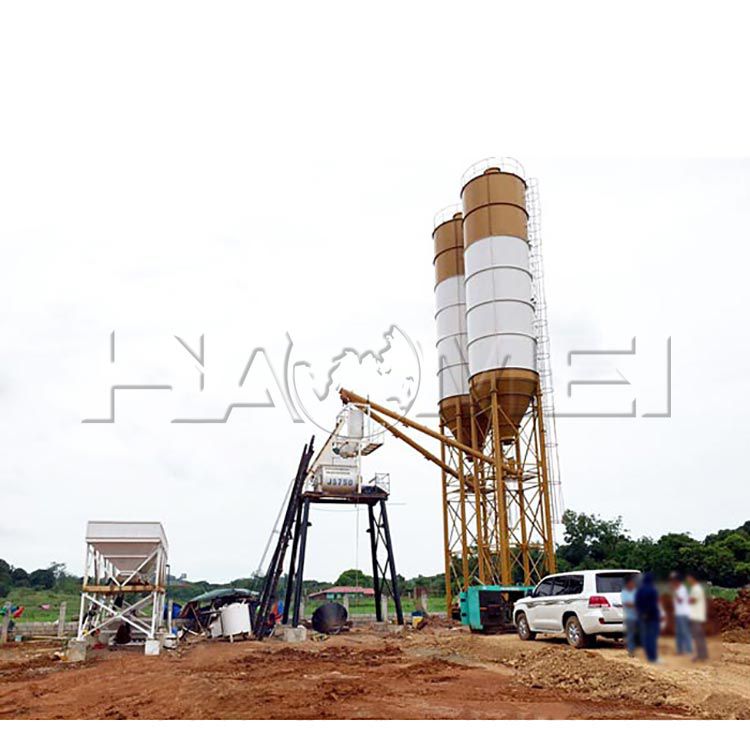
 Portable cement plants for sale can be quickly built and moved, and are suitable for use in various construction sites. Although mobile concrete mixing plants are relatively small in size, the quality of the concrete they produce is just as high. Mobile mixing plants also have the same functions as stationary concrete plant, so mobile mixing plants are a good choice for users.

Equipment configuration is the main factor affecting the mobile mixing plant price. The higher the configuration, the higher the degree of automation of the equipment, and the higher the price. The main difference lies in the feeding method of the mixing station, the degree of automation of the equipment, and the environmental protection performance of the equipment.

Portable cement plants for sale.jpg

There are two options for concrete mixers: twin-shaft mixers and drum mixers. The mixing process of a twin-shaft mixer occurs simultaneously in the radial direction and the axial direction. The main mixing area is located in the circumferential direction of the mixing body. The mixing space can be fully utilized during the entire mixing process, so that the aggregate, cement and water can reach a uniform mixing mode in a short time.

When mixing concrete, the drum mixer mainly rotates the drum and lifts the aggregates of each part through the large mixing blades to mix them freely, which is inefficient and of poor mixing quality.

There are also two types of cement silos for the customers to choose from: vertical cement silo and horizontal cement silo. Vertical cement silos occupy a small area and have low costs, but their biggest disadvantage is the height. Due to the high height of vertical cement tanks, the foundation work must be done well, and measures such as wind, rain, lightning and electricity protection must be taken, which is particularly inconvenient for equipment repair and maintenance.

The mobile cement silo for sale does not need foundation, it can be installed as long as the land is leveled. Horizontal cement silo is welded by container plates, with high strength, good sealing, easy disassembly and assembly, short installation cycle, and quick transfer. Welcome to consult us for the best solution.

Original source: https://www.haomei-machinery.com/a/portable-cement-plant-with-mobile-cement-silos.html

RMC Plant: Containerized Batching Plant

 Ready-mixed concrete actually refers to the mixing station that mixes a certain proportion of cement, aggregate, water, admixtures, mineral admixtures and other materials together after metering, and then sells them to the construction team. Ready-mixed concrete is generally sold as a commodity, so it is also one of the commercial concrete.

Compared with traditional on-site concrete mixing, the RMC plant has the characteristics of improving the stability and reliability of concrete quality, greatly reducing noise and dust pollution, effectively saving resources and recycling resources, and meeting the needs of high-strength and special performance concrete.

 RMC plant.jpg

The ready mix concrete batching plant has high metering accuracy, good mixing quality and high degree of automation. The ready-mixed concrete mixing station uses a twin shaft concrete mixer , which is suitable for rapid mixing of large quantities of concrete, such as on-site construction of bridge projects and production of commercial concrete mixing plant.

The containerized concrete mixing plant equipment adopts standardized transportation and complete container modular design. The entire equipment can be combined into 5 container modules, and the appearance design of each module is based on international container standards.

Convenient installation and relocation are a major advantage. The main modules of the containerized cement concrete mixing plant integrate water, gas and circuits. Only bolts, hoses and industrial waterproof aviation quick-plug connections are needed between the modules. The equipment can be installed and put into production in as fast as 3 days.

Compared with traditional mixing plants, the containerized batch plant does not require outriggers and mounting brackets, eliminating the need for foundation design and construction. As long as the ground hardness and flatness meet the requirements, foundation-free production is possible. For the harsh rain, snow, wind and sand weather outside, the container shell can protect various core components and reduce the failure rate.

Original source: https://www.concretebatchplanthm.com/a/rmc-plant-containerized-batch-plant.html

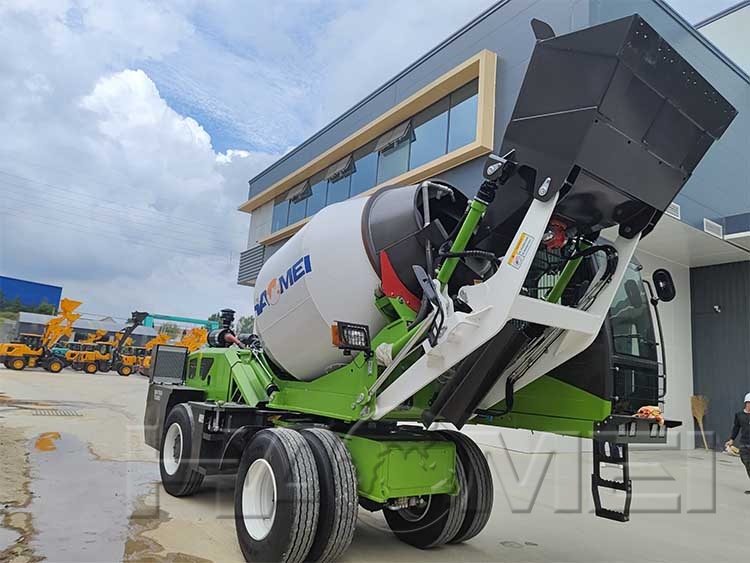
3.5 m3 Self Loading Concrete Mixer Truck

  Recent English Q&A discussions on Quora, Google, Reddit-style forums, and construction equipment communities show steady interest in t...