2026年7月15日星期三

Sicoma Concrete Mixer

 A Sicoma concrete mixer is widely associated with high-output batching plants, precast concrete lines, and ready-mix production where fast mixing, stable discharge, and long service life matter. For equipment purchasers comparing mixing machines, the value is not only in rated capacity. The real value is found in how the drum body, shafts, arms, liners, seals, and drive system work together under heavy aggregate impact and repeated daily cycles.

Most Sicoma-style twin-shaft mixers use two horizontal shafts with synchronized mixing arms. This layout creates strong material exchange across the mixing trough, helping cement, sand, stone, water, and admixtures reach uniform distribution in a short cycle. Exact specifications vary by model and configuration, so capacity, motor power, liner material, and discharge form should always be checked against the current manufacturer data sheet.

sicoma concrete mixer

Cutting-Edge Design Details That Improve Mixing

The main design advantage of this type of mixer is the twin-shaft mixing pattern. Instead of relying on slow tumbling, the counter-rotating shafts push materials through overlapping mixing zones. Aggregate is lifted, cut, folded, and forced toward the center and sides of the trough. This reduces unmixed pockets and supports consistent concrete strength from batch to batch.

A strong mixing body is also important. The trough is usually built from thick steel plate with bolted or replaceable liners inside the wear area. Bolted liners are easier to change than welded wear plates, reducing downtime during scheduled service. The mixing arms and blades are arranged at calculated angles to move material both radially and axially, so the batch does not simply rotate in place.

Shaft-end sealing deserves special attention. Concrete slurry is abrasive and alkaline, and leakage around shaft ends can damage bearings. High-quality machines typically use multi-stage sealing, with mechanical sealing rings, grease protection, and external bearing placement. An automatic or centralized lubrication system helps keep the seal area supplied with grease, lowering the risk of dry running.

Design elementFunctionPractical value
Twin horizontal shaftsProduce intensive shear and cross-flowFaster uniformity and stable slump
Replaceable linersProtect the mixing troughLower structural wear and easier service
Angled mixing bladesMove material in several directionsFewer dead zones and more even blending
Multi-stage shaft sealsBlock slurry from entering bearingsLonger bearing and shaft-end life
Hydraulic or pneumatic discharge gateControls concrete releaseCleaner discharge and easier automation

The discharge gate is another detail that affects daily operation. A well-fitted gate should open smoothly, close tightly, and resist concrete buildup around the sealing surface. In automatic batching plants, the gate position sensor should communicate correctly with the control system to prevent premature feeding or incomplete discharge.

Material Selection and Equipment Advantages

A mixer used for commercial concrete must resist impact, abrasion, vibration, and chemical corrosion. Many twin-shaft mixers use abrasion-resistant steel or high-chromium cast iron liners in heavy-wear zones. Mixing blades may be made from wear-resistant cast alloy or steel with hard-facing, depending on the supplier and application. These materials help protect the body when mixing crushed stone, manufactured sand, dry concrete, or low-slump precast mixes.

Sicoma double shaft concrete mixer

ComponentCommon material choiceAdvantage in concrete production
Mixing troughHeavy welded steel structureStrong support under continuous load
Wear linersAbrasion-resistant steel or cast alloyReduced wear from sand and stone
Mixing armsCast steel or alloy steelHigh strength against impact load
BladesWear-resistant alloyLonger working life in abrasive mixes
Shaft sealsMetal, rubber, polyurethane, and grease barrier combinationsBetter protection for bearings

The operating benefits are easy to understand on a production site. Short mixing time can increase batch plant output without increasing the plant footprint. Consistent mixing quality reduces rejected batches, strength variation, and customer complaints. A rigid body and balanced shaft system can also reduce abnormal vibration when the machine is correctly installed and maintained.

For compact batching lines or lower output projects, a JS500 Concrete Mixer may be considered where site space and hourly demand are limited. For higher-capacity concrete plants, a JS2000 Concrete Mixer can be evaluated when larger batch volume and stronger production rhythm are required.

Another advantage is automation compatibility. The mixer can work with aggregate batching machines, cement silos, screw conveyors, water scales, admixture scales, and PLC control systems. When sensors and interlocks are properly installed, the operator can manage feeding, mixing, discharge, alarm display, and cycle timing from the control room.

Troubleshooting and Maintenance for Stable Operation

Even a well-designed mixer needs correct operation. Most problems are caused by poor lubrication, worn liners, loose bolts, incorrect feeding sequence, hardened concrete buildup, or delayed replacement of wear parts. The table below gives practical checks that maintenance teams can use during daily work.

Sicoma concrete mixer machine

SymptomPossible causeRecommended action
Longer mixing timeWorn blades, incorrect blade angle, overloaded batchCheck blade wear, adjust or replace blades, verify batch weight
Shaft-end leakageInsufficient grease, damaged seal rings, hardened slurryClean seal area, confirm lubrication flow, replace worn seals
Abnormal vibrationLoose foundation bolts, uneven loading, damaged bearingTighten bolts, check feeding sequence, inspect bearing temperature and noise
Discharge gate leaksWorn gate liner, concrete buildup, weak cylinder pressureClean gate edge, inspect sealing plate, check hydraulic or pneumatic system
Motor overloadExcess batch volume, dry material blockage, low voltageReduce batch load, remove blockage after lockout, test power supply
Uneven concreteShort cycle, wrong water timing, failed admixture dosingAdjust mixing time, inspect water scale, calibrate admixture pump

Daily maintenance should start before production. Operators should inspect the inside of the mixer only after power isolation and lockout procedures are applied. Check blade clearance, liner thickness, arm bolts, shaft-end grease, discharge gate movement, and the condition of the emergency stop device. Concrete left inside the trough should be washed out before it hardens, especially around the gate and shaft-end areas.

Maintenance intervalWork itemPurpose
Every shiftClean inner trough, check abnormal sound, confirm lubricationPrevent buildup and early wear
DailyInspect blade bolts, liner bolts, discharge gate sealAvoid loose parts and leakage
WeeklyCheck gearbox oil level, coupling condition, bearing temperatureProtect the drive system
MonthlyMeasure liner and blade wear, test sensors and limit switchesKeep mixing quality and automation accuracy
Scheduled shutdownReplace worn liners, seals, blades, and damaged armsRestore performance before failure

When troubleshooting electrical or hydraulic faults, do not guess from alarm codes alone. Verify the actual field condition: sensor position, cylinder stroke, cable connection, air pressure, oil pressure, and control signal. If the mixer suddenly stops under load, isolate power before opening inspection doors. After cleaning out material, rotate only according to the manufacturer operating procedure to avoid damaging the gearbox or shafts.

For abrasive aggregates, set a planned wear inspection interval instead of waiting for visible holes in the liners. Once liners become too thin, the mixing trough can be damaged, and repair cost rises sharply. Keeping spare blades, liner plates, seal kits, grease, and common fasteners in stock is a practical way to reduce downtime during peak concrete demand.

Original source: https://www.haomei-machinery.com/a/sicoma-concrete-mixer.html

Portable Concrete Mixer and Pump

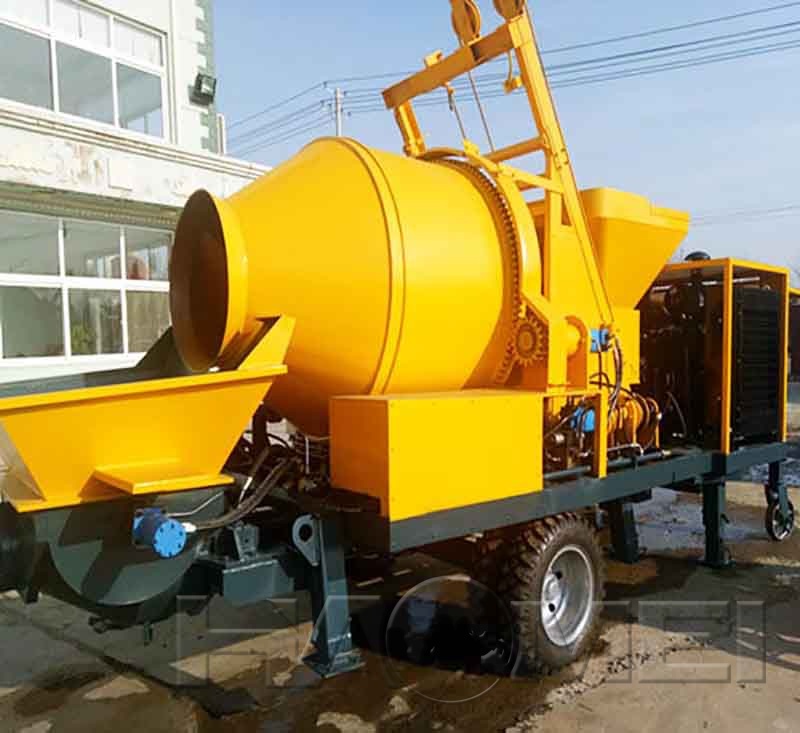
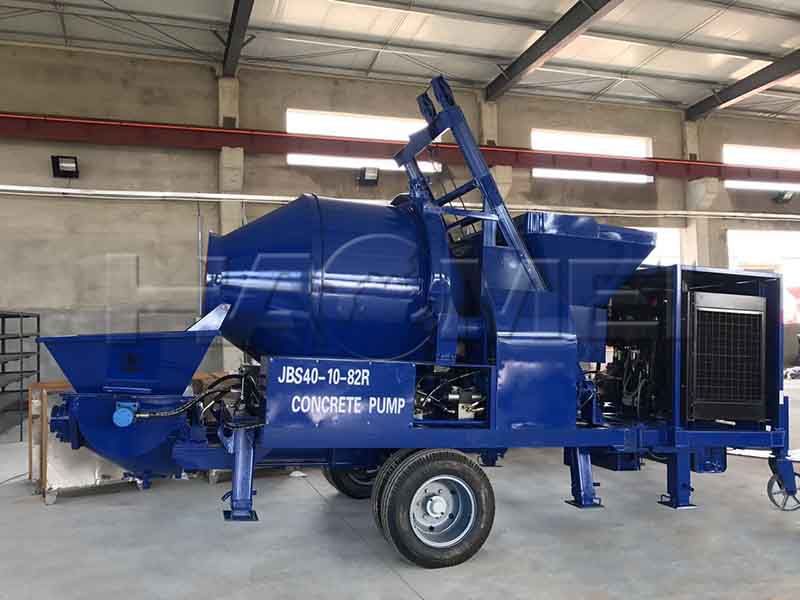
 A portable concrete mixer and pump is designed for contractors who need mixing and concrete conveying in one compact machine. Instead of arranging a separate mixer, transfer hopper, and pump, the operator can load raw materials, produce workable concrete, and deliver it directly through pipelines to slabs, foundations, columns, beams, or narrow work areas.

This type of equipment is especially useful where access is limited, labor is tight, or the pour point changes frequently. Modern units focus on compact structure, stable hydraulic performance, easy maintenance, and materials that can withstand abrasive concrete.

concrete mixer machine with pump

Advanced Design Details That Improve Field Performance

The main design value of this equipment is integration. A mixing drum or forced mixing system feeds a pumping hopper, while the pumping unit pushes concrete through steel pipes or flexible hoses. The result is a shorter material transfer path, which helps reduce segregation and waiting time.

In many modern machines, the mixer is mounted above or beside the hopper, so discharged concrete falls smoothly into the pumping chamber. A hopper screen helps stop oversized stones, cement bags, or debris from entering the pumping system. Inside the hopper, an agitator keeps the mix moving and reduces the risk of stiff concrete settling before each pump stroke.

The pumping mechanism commonly uses hydraulic cylinders to drive concrete pistons. Depending on model configuration, an S-tube valve or similar distribution system switches flow between cylinders and directs concrete into the delivery line. This design is widely used in concrete pumping because it supports continuous output and handles aggregate within the rated size range.

Portability is also built into the structure. A compact chassis, tow bar, support legs, and balanced machine layout make relocation easier between work points. For contractors comparing compact job-site options, the Concrete Mixer And Pump product type is often selected when both mixing and delivery must be handled by one operator team.

Control systems are becoming easier to use. Many units include a centralized electric control cabinet, pressure gauges, emergency stop buttons, hydraulic reversing, and optional remote control depending on configuration. Reversing the pump can help relieve pressure during early blockage symptoms, while clear panel labeling reduces operator mistakes during busy pours.

concrete mixing pump

Materials and Components Chosen for Durability

Concrete is highly abrasive. Sand, stone, cement paste, and water continuously rub against the drum, hopper, valve, pistons, pipes, and elbows. For that reason, material selection has a direct effect on service life and downtime.

Wear plates and cutting rings are often made from high-hardness alloy materials or manganese steel, depending on the machine design. These parts face strong friction during every pumping cycle, so good wear resistance helps maintain sealing performance and stable pumping pressure.

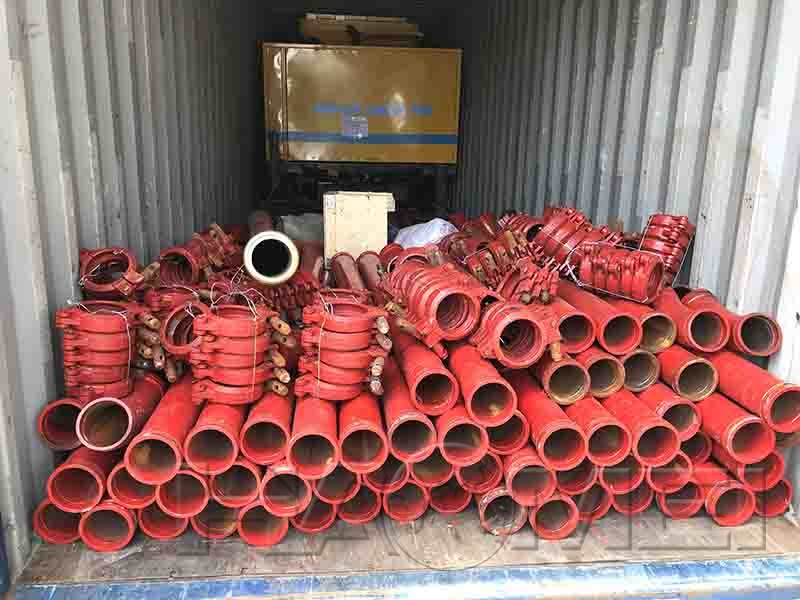
The delivery cylinders and hydraulic rods must resist pressure, heat, and long working hours. Chrome-plated rods, quality seals, and well-machined cylinder surfaces help reduce oil leakage and maintain hydraulic efficiency. Delivery pipes are usually made from wear-resistant steel, while flexible end hoses use reinforced rubber layers to balance strength and movement.

The following table shows common material choices and their practical value:

ComponentCommon Material or StructureAdvantage in Operation
Mixing drum or mixer linerWear-resistant steelReduces abrasion from sand and aggregate
S-tube, wear plate, cutting ringAlloy steel or manganese steelHelps maintain pumping pressure and sealing
Hydraulic rodsChrome-plated steelImproves corrosion resistance and seal life
Delivery pipeHardened or wear-resistant steelExtends service life under high-friction flow
Electrical cabinetSealed metal enclosureProtects control parts from dust and rain splash
End hoseSteel-wire reinforced rubberAllows flexible placing at the discharge point

Good materials do not replace maintenance, but they create a stronger base for reliable work. For smaller residential or rural construction tasks, a Small Concrete Mixer and Pump can offer similar material protection in a lighter, easier-to-move structure.

Operating Advantages and Troubleshooting in Daily Work

The first advantage is labor reduction. Workers no longer need to move concrete by wheelbarrow over long distances, up ramps, or through narrow passages. The pump line carries the mix directly to the placement area, which improves speed and reduces physical strain.

The second advantage is better pour continuity. When mixing and pumping are coordinated in one machine, the operator can maintain a steadier rhythm. This is helpful for floor slabs, small bridges, road edges, slope protection, water channels, and building foundations where interruptions can affect surface quality.

The third advantage is flexible site arrangement. The machine can stay in a convenient loading position while hoses reach the placement point. This matters on farms, village roads, basements, courtyards, and renovation sites where a transit mixer truck may not enter easily.

concrete mixer with pump

Even strong equipment can face problems if the mix design, operation, or cleaning process is not controlled. Operators should follow the manufacturer manual, use aggregates within the rated size, keep slump within the recommended range, and clean the pipeline before concrete hardens.

ProblemLikely CausePractical Action
Pipeline blockageLow slump, oversized aggregate, poor lubrication, long pause during pumpingStop feeding, reverse pump briefly if allowed, locate blockage, clean pipe safely, restart with proper mortar lubrication
Low pumping outputWorn wear plate or cutting ring, low hydraulic pressure, stiff concreteCheck wear parts, inspect hydraulic oil level and pressure, adjust mix workability within project requirements
Hydraulic oil overheatingDirty oil cooler, low oil level, continuous overload, high ambient temperatureClean cooler, add approved oil, reduce overload, check fan and oil filter condition
Mixer discharge is unevenDry material buildup, damaged blades, incorrect charging orderWash mixer after use, inspect blades, load water, cement, sand, and aggregate as instructed by the manual
Electric motor or diesel engine fails to startPower supply fault, weak battery, fuel issue, emergency stop engagedCheck cables, battery, fuel line, breaker, and emergency stop position before calling service
Concrete leaks near valve areaWear ring gap, damaged seal, loose fasteningInspect sealing parts, tighten bolts to specified torque, replace worn components

Safe troubleshooting starts with pressure release. Before opening any pipe clamp, the operator should stop the machine, relieve pipeline pressure, and wear protective equipment. Concrete under pressure can discharge suddenly and cause injury.

Daily care is simple but important. Grease lubrication points, check hydraulic oil level, inspect pipe clamps, clean the hopper and mixer, and wash the delivery line immediately after use. Weekly checks should include bolt tightness, hose condition, electrical terminals, wear plate clearance, and the condition of seals. A machine that is cleaned and inspected regularly will pump more smoothly, consume less energy, and reduce unplanned downtime on demanding construction sites.

Original source: https://www.concrete-pump-cn.com/a/portable-concrete-mixer-and-pump.html

How to Choose th Right Concrete Mixer Pump

 In small and medium-sized infrastructure projects, rural housing construction, flooring, and slope protection, concrete mixer pumps integrate on-site mixing and long-distance pumping, making them core construction equipment. Compared to pure delivery pumps, they have built-in mixing capabilities, eliminating the need for commercial concrete mixer trucks, resulting in greater mobility and lower costs.

However, many construction companies focus solely on price when selecting equipment, neglecting parameter matching. This can easily lead to problems such as weak pumping, pipe blockage, and difficulties in site access, resulting in project delays and increased maintenance costs. This article, combining engineering scenarios and core parameters, outlines a simplified selection method.

concrete mixer pumps.jpg

I. Determining Equipment Standards by Project Type

Prioritize clarifying the project attributes before selecting equipment to avoid overkill or underkill.

1. Small, scattered projects

For rural self-built houses, small courtyard flooring, septic tank pouring, etc., with a daily volume <50m³ and limited space, trailer-mounted small mixing pumps are preferred, as they are compact, easy to assemble and disassemble, and offer outstanding flexibility and cost-effectiveness.

2. Medium-sized conventional projects

For rural roads, multi-story residential buildings, slope spraying and anchoring, etc., with a daily volume of 50-150 m³ and moderate pouring distance, a standard forced-action mixing pump is selected, offering balanced mixing and pumping performance, supporting continuous field operations.

3. Large-scale, high-difficulty projects

For high-rise buildings, long-distance mountain slope protection, etc., with a daily volume >150 m³, requiring high lift and long-distance transport, a large-displacement, high-pressure mixing pump is selected. For complex scenarios, a boom structure can be used to reduce pipe laying difficulty.

II. Core Performance

1: Output Capacity, Matching Construction Efficiency

Output capacity is based on hourly delivery volume as the core indicator, combined with pumping pressure reference, directly determining pouring efficiency.

Small models (20-60 m³/h): Suitable for small-volume intermittent operations, low energy consumption, and quick return on investment, used for scattered agricultural construction projects.

Medium models (60-90 m³/h): Industry-standard models, balancing efficiency and flexibility, the mainstream choice for rural construction and road projects.

Large-scale models (90-150 m³/h): High pressure and large displacement, suitable for large-area simultaneous construction, but with higher self-weight, energy consumption, and procurement costs.

2: Pumping Pressure and Distance, Avoiding Blind Spots

Pipe blockage and insufficient feeding height are mostly caused by a mismatch between pressure and conveying distance. Elbows and flexible hoses increase conveying resistance; therefore, a margin of safety should be allowed when selecting a model.

Low-pressure models (60-80 bar): Vertical conveying ≤30m, horizontal conveying ≤200m, suitable for low-rise buildings and close-range floor pouring.

Medium-pressure models (80-160 bar): Vertical 30-60m, horizontal 200-500m, preferred for mid-rise buildings and long-distance conveying on slopes.

High-pressure models (16-32 MPa): Vertical >60m, horizontal >500m, suitable for high-rise buildings and ultra-long-distance conveying scenarios with multiple bends.

Practical Tips: A 90° bend increases the equivalent horizontal distance by 8-10m; vertical conveying reduces pumping capacity by 20%-30%, so it's recommended to add a 10%-20% pressure margin when selecting a pump.

3. Key Compatibility: Aggregate Particle Size, Preventing Pipe Blockage at the Source

Matching the aggregate particle size with the pipe diameter is crucial to preventing blockages.

Small Pump (100mm pipe diameter): Suitable for aggregates ≤20mm, only for fine aggregate concrete and mortar pouring.

Standard Pump (125mm pipe diameter): General specification, suitable for aggregates ≤31.5mm, meeting the needs of most civil engineering projects.

Large Diameter Pump (150mm pipe diameter): Suitable for aggregates ≤40mm, suitable for coarse aggregate concrete, dams, and other high-strength pouring.

Ⅲ. Scenarios Compatibility: Power Type, Matching On-Site Power Supply Conditions

Equipment is available in electric and diesel versions; neither is inherently superior, selection depends on the site's power supply conditions.

Electric concrete mixing pump: Low cost, low noise, low failure rate; relies on a stable three-phase power grid, suitable for long-term construction in urban areas and towns with power grids.

Diesel concrete mixer pump: No external power supply required, highly mobile; higher fuel costs; suitable for mountainous areas, remote construction sites without power grids, and temporary emergency repair projects.

Additional suggestion: For sites with unstable power supply, prioritize diesel-electric dual-fuel models to balance flexibility and economy.

Original source: https://www.concretebatchplanthm.com/a/how-to-choose-the-right-concrete-mixer-pump.html

2026年3月3日星期二

Concrete Mixer Machine With Pump

 Modern job sites need concrete placed faster, with fewer handling steps, and with more consistent quality. A concrete mixer machine with pump combines two core functions in one unit: it mixes fresh concrete on site and then pumps it directly to the pour area through a pipeline. This integrated approach reduces rehandling, lowers the risk of segregation during transfers, and helps crews keep a steady placing rhythm, especially where wheelbarrows or cranes slow the workflow.

concrete mixing pump trailer


How the mixer plus pump system works on site

A combined mixing and pumping unit typically includes a loading hopper, a mixing drum or twin-shaft style mixer, a pumping system (often piston type), a distribution valve, and a pipeline connection. Materials are loaded into the hopper, mixed to the required consistency, then transferred into the pumping chamber. The pump pushes the concrete through steel pipes or rubber hoses to the target location.


For most applications, the key performance factors are output and pumpability. Output is influenced by mixing efficiency and pump displacement, while pumpability depends on the mix design, aggregate grading, and the pressure and friction losses in the line. When matching a unit to a project, check the maximum horizontal and vertical pumping distance, rated output in cubic meters per hour, and recommended aggregate size. In practice, stable pumping is achieved when the mix has enough mortar content to lubricate the line while maintaining the specified strength.


If your projects frequently require pumping from one compact footprint, a dedicated Concrete Mixing Pump configuration can be a practical way to streamline both material handling and placement.

Where it fits best: applications and productivity advantages

This equipment is widely used for residential construction, small to mid sized commercial jobs, rural infrastructure, foundations, slabs, and repair works where ready mix logistics are difficult or where placing conditions are tight. It is also valuable on sites with limited crane access or where labor availability is constrained.

Practical advantages that matter to construction equipment purchasers include:


  • Faster cycle time: mixing and pumping are coordinated, reducing idle time between batches.
  • Lower labor intensity: less manual transport and fewer transfer points.
  • Better placement control: steady flow supports more uniform consolidation and finishing.
  • Flexible access: pipelines can route around obstacles and deliver to elevated or enclosed areas.


Market demand has been moving toward compact, trailer mounted, and easy transport models, with greater attention on fuel efficiency, wear parts life, and simplified maintenance access. Many contractors also prefer machines that can handle a wider range of mixes, from standard C20 to higher grades, as long as aggregate size and slump remain within the pumpable range.

Further reading: https://www.concrete-pump-cn.com/a/concrete-mixer-machine-with-pump.html

Automatic Cement Brick Making Machine in Zambia

 In Zambia, the construction industry is booming with the acceleration of urbanization and the continuous advancement of infrastructure projects, creating broad growth potential for the cement brick machine market.

In the Zambian market, the concrete block making machine for sale is available in a variety of types, primarily manual, semi-automatic, and automatic. Manual brick machines are relatively inexpensive, simple in structure, and easy to operate, making them a more economical choice for small construction projects or self-employed individuals with limited funds.

Semi-automatic brick machines, based on manual machines, add some mechanized features, resulting in improved production efficiency. They are suitable for medium-sized brick factories and can meet the demand for construction bricks within a certain area.

automatic cement brick making machine.jpg

However, the automatic cement brick making machine is currently becoming increasingly popular in the Zambian market. With the significant increase in demand for bricks in the construction industry and the increasing demands for production efficiency and product quality, the advantages of automatic brick machines are becoming increasingly prominent. Many large-scale construction projects and large-scale brick factories are opting for automatic brick machines to ensure efficient and stable production.

Advantages of Automatic Brick Machines

The highly automated production process is their core competitive advantage. The entire production process requires virtually no human intervention, requiring only a small number of workers for necessary monitoring and equipment maintenance. This feature not only greatly improves production efficiency but also significantly reduces labor costs.

According to actual production data, a medium-sized automatic brick machine can produce tens of thousands of bricks per day, achieving several times or even dozens of times higher production efficiency than traditional manual brick machines.

Automatic brick machines also excel in product quality control. Leveraging advanced control systems and precise metering devices, they ensure highly accurate raw material ratios during each production run, guaranteeing consistent quality and performance for each cement brick. The resulting bricks are not only dimensionally precise and smooth in appearance, but also meet the strict standards of the construction industry in key quality indicators such as strength and density, providing a solid and reliable material guarantee for high-quality construction across various projects.

Automatic brick machines also excel in energy conservation and environmental protection. Their advanced mixing and molding technologies ensure thorough and uniform mixing of the cement mixture during production, effectively reducing raw material waste and lowering energy consumption.

Through structural optimization and the use of appropriate environmentally friendly materials, the machine's noise and exhaust emissions are effectively controlled during operation, fully complying with Zambia's increasingly stringent environmental regulations. This is crucial for brick factories to achieve sustainable development strategies.

Automatic brick machines also offer exceptional production flexibility. They can quickly and easily change molds to meet varying market demands, effortlessly producing a wide range of cement product specifications and types. From common building blocks and standard bricks to kerbstones for road construction, they can meet a wide range of needs. This demonstrates their strong market adaptability and ability to fully meet the diverse demands of the construction market.

Price Range

The price of an automatic brick machine is influenced by a variety of factors, including its production capacity, degree of automation, brand recognition, and specific configuration. In the Zambian market, small automatic brick machines typically cost tens of thousands of dollars. Welcome to inquire block making machine price in Zambia from us directly.

Original source: https://www.haomei-machinery.com/a/automatic-cement-brick-making-machine-in-zambia.html

What Makes a High-Efficiency Self Loading Concrete Mixer Truck

 Materials are the foundation of equipment durability and a crucial guarantee of concrete quality. The self loading concrete mixer truck operates in complex environments, often facing heavy loads, bumpy rides, and material abrasion. Therefore, material selection must balance the equipment's high-intensity operational requirements with the stability of concrete performance, forming a dual quality defense line to mitigate the risk of malfunctions and potential quality issues from the outset.

In terms of equipment structure, core load-bearing components such as the chassis utilize Baosteel special steel or 700L-grade ultra-high-strength steel. Their tensile strength and impact resistance far exceed those of ordinary steel, effectively handling structural stresses during heavy-duty transportation and preventing chassis deformation and breakage.

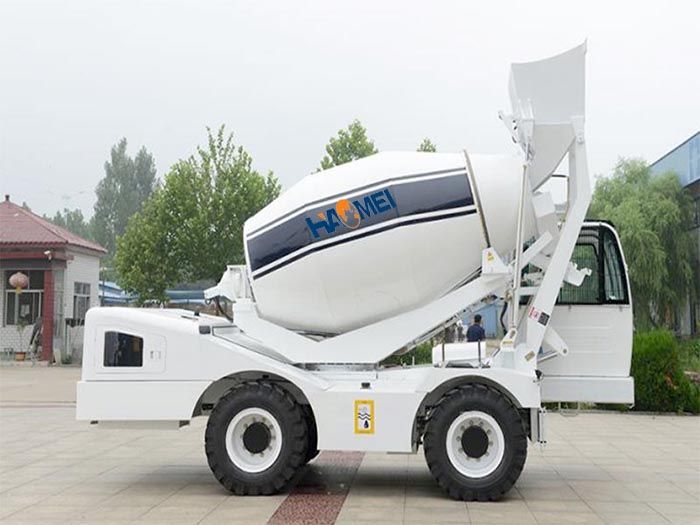
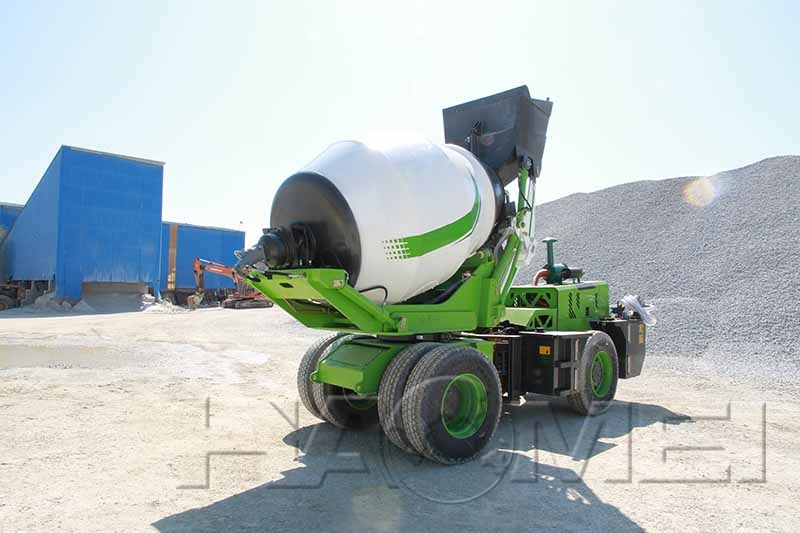
self loading concrete mixer truck.jpg

As a core working component, the mixing drum is of paramount importance in material selection. Mainstream models often utilize BW300TP next-generation wear-resistant steel or NM400 low-alloy wear-resistant steel, jointly developed with Baosteel.

These steels achieve a hardness of HB300 and wear resistance more than twice that of ordinary steel plates. Furthermore, through equal thickness design and the addition of wear-resistant strips on the blades, the tank body and blades wear synchronously, extending service life by 50% compared to ordinary products, reaching 8-10 years.

In addition, the sub-beams of the upper structure use rectangular tubular steel with superior tensile strength, and the chassis connecting parts use cast alloy steel with higher hardness. The precise matching of materials in each part to operational requirements ensures the stability and reliability of the entire vehicle structure.

It is worth noting that material selection must also consider concrete quality assurance. Wear-resistant and corrosion-resistant tank materials prevent impurities from steel wear from mixing into the concrete, thus preventing a decline in concrete strength. Materials with excellent sealing performance reduce moisture loss during transportation, ensuring stable concrete slump and laying a solid foundation for project quality.

In terms of intelligent control, the new generation of the self loader concrete mixer generally integrates multi-source sensor fusion and intelligent control algorithms to achieve full automation and precision in the operation process. The onboard digital weighing system can accurately weigh the amount of aggregate, cement, and water in real time, with error control at an industry-leading level.

Combined with a fully automatic water addition control system, it can automatically adjust the amount of water added according to different concrete mix proportions, avoiding human error and controlling the 28-day strength variation coefficient of concrete to within 3.5%, far exceeding the industry average.

Technical optimization of operational functions also continuously improves practicality. The mixing drum adopts the Archimedean spiral principle to design double logarithmic spiral blades, combined with laser dynamic balancing correction technology, ensuring that the concrete continuously undergoes axial and radial composite motion during transportation, preventing segregation and initial setting.

After two hours of continuous operation, the slump loss is controlled to within 15% of the initial value. The discharge system is equipped with a 270° rotating unloading chute and a hydraulic telescopic chute, enabling precise pouring from multiple angles, reducing secondary transfers, and adapting to different construction scenario requirements.

The combination of high-quality materials, stringent quality control, and technological iteration ultimately translates into the core competitiveness of self-loading concrete mixer trucks—comprehensive efficiency improvement. This improvement is not only reflected in the faster operation speed of individual stages, but also in the optimization of the entire process and cost savings, creating significant economic and time value for construction companies.

Original Source: https://www.self-loading-mixer.com/a/what-makes-a-high-efficiency-self-loading-concrete-mixer-truck.html

Self Loading Concrete Mixer Truck

 A self-loading concrete mixer truck combines material loading, water dosing, mixing, and discharge in one mobile machine. For contractors working in areas with limited batching access, tight schedules, or high labor costs, this equipment can help keep pours continuous without relying on external loaders or ready-mix delivery windows.

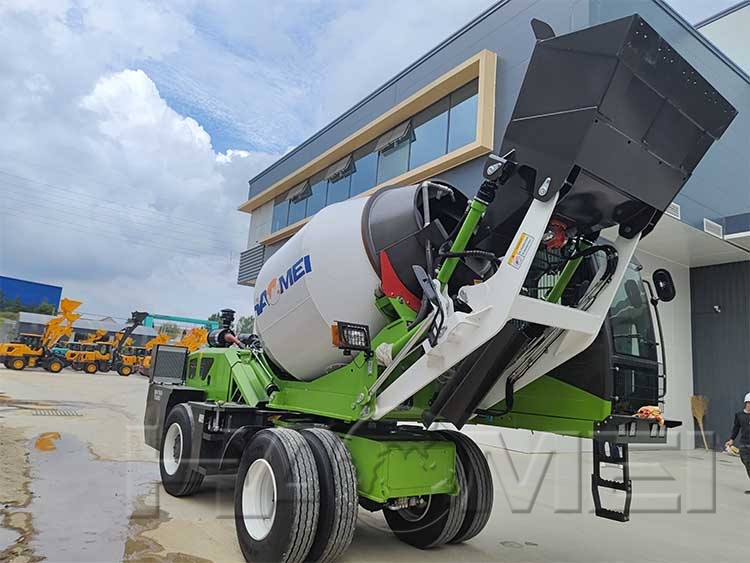
self loading concrete mixer truck

Unlike a standard transit mixer that mainly transports premixed concrete, this type is designed to produce concrete on site from cement, aggregates, and water. Most models use a front-mounted loading bucket to scoop aggregates, an onboard water tank with a metering system, and a rotating drum that mixes during travel and discharges at the point of placement. The result is a compact, jobsite-focused solution for slabs, small foundations, rural construction, utility work, and repair projects where flexibility matters.

How It Works And Where It Fits

The typical workflow is straightforward. The operator drives to the stockpile, loads aggregates with the bucket, adds cement (bagged or from a small silo setup), meters water, and mixes in the drum while moving to the pour location. Discharge is usually through a chute, with the drum reversing to control flow.

Where this machine stands out is independence. It reduces coordination with a wheel loader and minimizes downtime caused by waiting for ready-mix trucks. It is also useful when access roads, weight limits, or remote locations make regular supply difficult.

Common applications include:

  • Rural house construction and small commercial builds

  • Sidewalks, curbs, and municipal maintenance

  • Farm and industrial yard slabs

  • Tunnel, slope, and drainage works with scattered pour points

If you are also evaluating conventional transport solutions, a dedicated Concrete Mixer Truck may still be preferred for high-volume city pours supplied by a central batching plant.

Design Features That Impact Productivity

Not all configurations deliver the same output. Focus on design details that affect cycle time, mix consistency, and operator control.

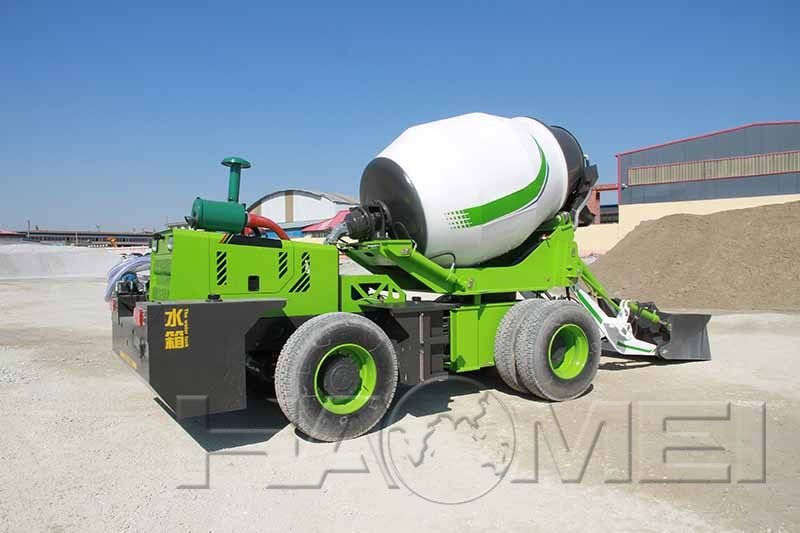
self loading concrete mixer machine

Key components to compare:

  • Loading bucket geometry and breakout force: A deeper bucket and strong hydraulics improve loading speed in coarse aggregates.

  • Water dosing system: Look for a metered system rather than manual filling, especially when mix repeatability is important.

  • Drum and blade design: Blade angle and wear-resistant liners support faster, more uniform mixing.

  • Transmission and driveline: Hydrostatic drive can improve low-speed control on uneven sites, while mechanical drive may offer simpler maintenance.

  • 4x4 and steering modes: Articulated steering, crab steering, or tight turning radius help in confined sites.

  • Operator visibility and controls: Camera options, ergonomic joysticks, and clear gauges reduce operator fatigue.

Typical Specs To Request From A Supplier

Ask for verified performance ranges rather than marketing labels. The table below lists what procurement teams usually compare first.

ParameterWhat To Ask ForWhy It Matters On Site
Batch outputm3 per batch and hourly productivityDetermines how many workers and placements you can support
Drum capacityTotal and effective mixing volumePrevents overloading and poor mix quality
Water tankCapacity and metering accuracySupports consistent slump across batches
Engine powerRated power and emissions levelAffects hill climbing, loading speed, and compliance
Drive and steering4WD, steering modes, gradeabilityImpacts mobility on mud, gravel, and slopes
Discharge height and chute reachStandard and optional extensionsReduces rehandling and improves placement flexibility
Service accessGrease points, filter access, parts commonalityLowers downtime and maintenance cost

For compact urban work or smaller pours, you may compare models like the hm3.5 self loading mixer truck when maneuverability is the priority.

Selection Checklist For Construction Equipment Procurement

Choosing the right unit depends on your job mix and support conditions. These checks help avoid under-sizing or paying for features you will not use.

  1. Match output to placement methodIf your crew places with wheelbarrows or small pumps, a moderate hourly output may be optimal. Oversized output can increase waste if placement cannot keep up.

  2. Consider material logistics, not just the mixerConfirm how aggregates and cement will be stored and kept dry. If you will use bagged cement, verify safe loading procedures and dust control. If using a mini silo, confirm compatibility with your site setup.

  3. Verify mix quality controlsAsk how water is measured, whether there is a flow meter, and how the operator can repeat a proven recipe. Consistency matters for compressive strength and finishability.

  4. Plan for wear and maintenanceBuckets, drum blades, and chutes are wear items. Request details on steel grade, liner options, and typical replacement intervals. Also confirm grease schedules and whether daily checks are realistic for your crew.

  5. Evaluate operator requirementsMany jobsites benefit from a single skilled operator managing the full cycle. Confirm training availability and whether controls are intuitive for your labor pool.

  6. Think about transport and permitsCheck operating weight, axle load, and dimensions against your local transport rules. For remote projects, consider how the machine will be delivered and serviced.

Market Trend Notes

Demand is rising in regions where projects are dispersed and ready-mix supply is inconsistent. Contractors are also favoring machines that reduce labor dependency and improve schedule control. On the product side, expect continued upgrades in water metering, operator-assist visibility, and more efficient drivetrains aimed at lower fuel use per cubic meter.

self loading transit mixer

By focusing on measurable productivity, mix consistency, and serviceability, you can shortlist a configuration that fits your typical pour size and site conditions without overpaying for capacity you will rarely use.

Original source: https://www.concretebatchplanthm.com/a/self-loading-concrete-mixer-truck.html

How to Choose The Right Mini Hot Mix Plant for a Contractor

  For small-to-medium-scale projects—such as road maintenance, rural road repairs, residential complex pavement resurfacing, and sporadic mu...