2026年9月22日星期二

How to Choose The Right Mini Hot Mix Plant for a Contractor

 For small-to-medium-scale projects—such as road maintenance, rural road repairs, residential complex pavement resurfacing, and sporadic municipal patching—traditional large-scale asphalt mixing plants often prove inefficient; their large footprint, cumbersome relocation processes, and high investment costs frequently lead to wasted resources.

In contrast, mini hot mix asphalt plants for sale have become essential equipment for small and medium-sized contractors due to their compact flexibility, low investment costs, and quick return on investment. These mini plants generally fall into two categories: small stationary units and mobile units. How should one choose?

I. Key Differences

1. Small Stationary Hot-Mix Asphalt Equipment

The mini hot mix plant is streamlined, lightweight versions of large-scale mixing stations. Featuring a fixed structure and compact layout, they occupy significantly less space than traditional large equipment. With production capacities typically ranging from 2 to 60 tons per hour, they excel in stable, high-volume production, precise output, and low failure rates.
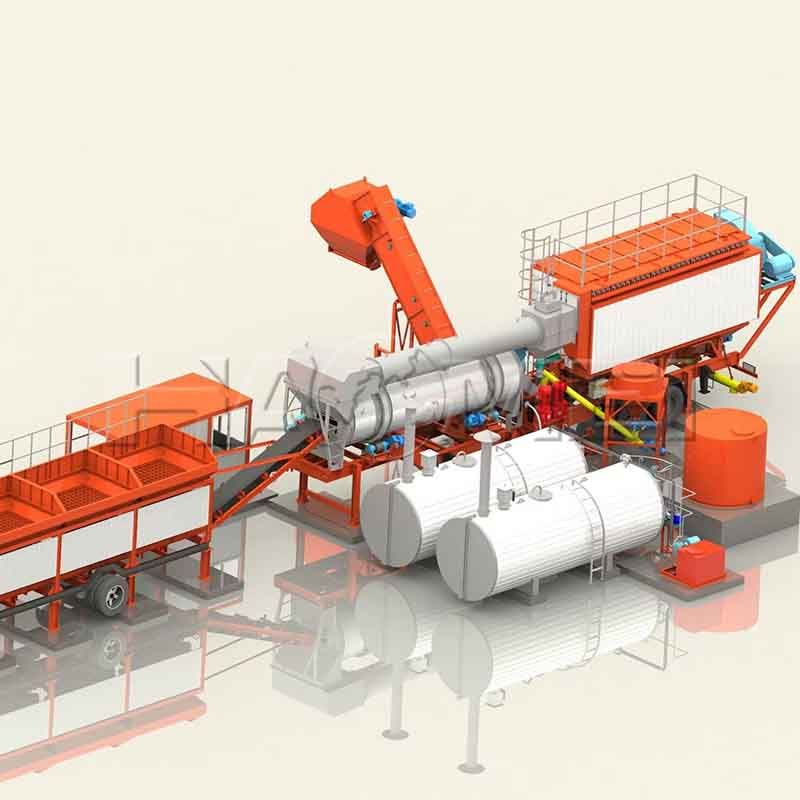
 mini hot mix plant .jpg

These units do not require complex infrastructure; installation and commissioning can be performed on a simple hardened surface. They retain the advantages of large-scale equipment—such as precise mix proportioning and stable temperature control—while avoiding the issues of high costs and resource waste associated with idle large-scale machinery.

Their core strengths lie in high mixing precision, operational stability, and ease of maintenance. They ensure accurate metering of aggregates, asphalt, and fillers, as well as precise control of the bitumen-to-aggregate ratio, resulting in a uniform, dense output that fully meets quality standards for rural roads, industrial site roadways, and batch repair projects. The downside is that the equipment is stationary and cannot be moved at will; relocating between job sites requires disassembly, transport, and re-installation/commissioning, which is time-consuming and labor-intensive.

2. Mobile Hot-Mix Asphalt Equipment

Mobile hot-mix asphalt plants are purpose-built for scenarios requiring frequent site transfers and scattered operations. The entire unit is integrated onto a trailer chassis with a modular design, eliminating the need for disassembly or permanent infrastructure. They can be relocated simply by towing; once on-site, they are ready for operation after connecting to a power source and undergoing basic commissioning, making them the ideal choice for mobile construction and emergency repairs.

With production capacities ranging from 2 to 80 tons per hour, they are suitable for the vast majority of small-to-medium-scale and sporadic projects. Its key advantage is exceptional mobility, making it perfectly suited for scenarios such as sporadic municipal road repairs, emergency road maintenance, scattered repairs in remote rural areas, and multi-site roving maintenance. It effectively addresses pain points like the difficulty of material discharge for small projects, significant temperature loss during long-distance transport, and high transportation costs.

Compared to stationary equipment, mobile units feature a more streamlined design and lower operational complexity; however, they offer slightly less stability for continuous mass production, making them better suited for intermittent, small-batch construction scenarios.

II. How to Choose a right one

1. Consider the Construction Scenario

If you regularly undertake small-to-medium-sized road projects with concentrated volumes in fixed areas—such as township road upgrades, comprehensive paving for industrial parks, or area-wide maintenance—where the project duration exceeds three months and the work site is fixed, prioritize a small stationary hot-mix asphalt plant. Stable, continuous output and precise mixing quality significantly boost construction efficiency, while lower long-term failure rates offer superior overall cost-effectiveness.

If your core business involves municipal emergency repairs, patching scattered locations, roving maintenance across multiple townships, or short-term sporadic projects—characterized by dispersed sites, frequent relocation, and short durations per site—decisively choose a mobile hot-mix asphalt plant. These units eliminate the need for repeated disassembly, assembly, and commissioning; they are ready for immediate use, thereby avoiding time-consuming relocations, equipment downtime, and the cooling or degradation of asphalt mixtures during transport, all of which greatly enhances operational flexibility.

2. Consider Production Capacity Requirements

The capacity of a mini hot-mix asphalt plant directly determines the construction schedule; the guiding principle for selection is "slight surplus capacity without blindly chasing scale." For a daily output of under 200 tons and small individual work areas, a small or mobile unit with a capacity of 2–30 tons/hour suffices for routine sporadic work while minimizing equipment investment and energy consumption. For a daily output of 300–500 tons and batch paving requirements, prioritize equipment with a capacity of 40–60 tons/hour; small stationary units suit continuous mass production, whereas mobile units suit high-frequency relocation combined with mass production.

3. Consider Construction Quality

The quality of road engineering hinges on the mix ratio and temperature of the asphalt mixture; therefore, equipment configuration must be carefully evaluated during the selection process. High-quality compact equipment should feature an intelligent PLC control system to ensure fully automated, precise metering of aggregates, asphalt, and powder materials. Metering accuracy should be maintained within ±0.5% for aggregates and ±0.3% for asphalt; precise control of the bitumen-to-aggregate ratio prevents quality issues such as surface raveling, cracking, and disintegration.

Additionally, a constant-temperature control system is essential to maintain stable temperatures throughout the process, thereby eliminating problems like uneven mixture temperatures and poor bonding. Generally, small stationary equipment offers superior metering stability and temperature control precision, making it the preferred choice for projects with high pavement quality standards.

4. Consider Environmental Protection and O&M

With environmental regulations for construction projects becoming increasingly strict, environmental features must not be overlooked during equipment selection. Whether stationary or mobile, equipment should come standard with dust removal systems and asphalt fume treatment units to effectively curb dust and harmful gas emissions, ensuring compliance with site environmental standards and avoiding work stoppages for rectification.

Priority should also be given to equipment with simple structures, universal parts, and easy maintenance. While small equipment naturally offers low O&M costs and low failure rates, mobile equipment requires a focus on chassis durability and modular integration to minimize long-term repair costs and downtime losses, ultimately ensuring cost-effectiveness over the equipment's entire lifecycle.

III. Summary

Small stationary hot-mix asphalt plants excel in stable, high-volume production, high precision, and low maintenance costs; they are ideal for fixed sites and centralized, batch-based small-to-medium paving projects where long-term, stable operational returns are the priority.

Mobile hot-mix asphalt plants offer flexibility in relocation, rapid deployment, and emergency adaptability; they are suited for scattered, mobile, and emergency repair projects, effectively addressing the challenges associated with multi-site operations. Welcome to inquire mobile hot mix plant price from us directly.

Original source: https://www.concretebatchplanthm.com/a/how-to-choose-the-right-mini-hot-mix-plant-for-a-contractor.html

2026年9月9日星期三

How Does A Fully Automatic Concrete Batching Plant Operate

 In the fields of infrastructure, municipal engineering, and road and bridge construction, fully automatic concrete mixing plants are essential equipment for ensuring consistent concrete quality and efficient supply. Unlike traditional manual mixing setups, these fully automatic concrete batching plants utilize integrated intelligent control systems to automate the entire workflow—including raw material unpacking, storage, proportioning, mixing, conveying, and pumping—thereby significantly reducing human error and enhancing construction efficiency. 

I. Core Components of the Mixing Plant

A standardized, fully automatic concrete mixing plant is a modular system comprising multiple pieces of equipment working in concert; each unit performs a specific, indispensable function. Key auxiliary components include: cement bag breaker, Pneumatic cement feeder, cement silos, aggregate batching machine, a fully automated control room, concrete mixer, concrete mixer trucks, boom pumps or trailer pumps. With clearly defined roles, these units form a complete operational chain covering raw material storage, precise batching, homogeneous mixing, finished product transport, and on-site pumping.


II. In-Depth Analysis of the Three Core Operational Systems

The operation of a fully automatic mixing plant centers on three major systems—material supply, mixing, and pumping—which work in coordination to achieve standardized, automated concrete production.

(I) Material Supply System

The material supply system serves as the plant's "supply depot and transport channel," responsible for the bag opening, storage, and metered conveyance of powdery materials such as cement. Key equipment includes cement bag openers, horizontal feeders, and cement silos; the entire process is enclosed to prevent dust pollution while ensuring extremely high metering accuracy. 

1. Cement Bag Breaker

Acting as the initial stage of the powder intake process, this unit automates the opening of bagged cement, fly ash, and other cementitious materials. It automatically handles bag gripping, cutting, and material screening, fully discharging the contents while filtering out bags and impurities to prevent foreign matter from entering downstream equipment. This ensures raw material purity at the source and replaces manual bag opening with a safe, highly efficient process.

2. Horizontal Cement Feeder

It is a core intermediate transport unit. This equipment receives material from the cement bag breaker and connects to the cement silos. Utilizing a horizontal screw conveyor structure, it operates smoothly with excellent sealing. It precisely adjusts conveying speed and volume based on control system commands, ensuring continuous, steady material flow and eliminating issues such as clogging, leakage, or supply interruptions, thereby guaranteeing stable material delivery.

3. Cement Silo

This is a large, vertical, sealed storage unit designed to hold powdery materials—such as cement and fly ash—after they have been unpacked and conveyed. The cement silo unit is equipped with material level monitoring, dust removal, and arch-breaking devices; it enables real-time monitoring of material inventory, automatically clears internal dust, and prevents powdered materials from clumping due to moisture or forming bridges that cause blockages. Serving as the core buffer for raw materials, the cement silo ensures a steady supply of materials for the proportioning stage, thereby guaranteeing continuous operation of the mixing plant.


(II) Mixing System

The mixing system is the heart of concrete production, directly determining the concrete's uniformity, strength, and workability. The core equipment is the mixer; the two mainstream types—twin-shaft mixers and planetary mixers—are suited to different construction scenarios. Under the precise control of a fully automated control room, the entire system manages the proportioning and mixing of aggregates, powders, water, and admixtures.

1. Twin-shaft mixer

It is the most widely used mixing equipment in engineering, suitable for large and medium-sized mixing plants. The twin shaft concrete mixer features two mixing shafts rotating synchronously in opposite directions, paired with multi-angle mixing blades to ensure comprehensive coverage with no dead zones. It rapidly and thoroughly kneads and blends sand and gravel aggregates, cement, water, and admixtures. Offering high efficiency and uniform discharge, it is highly stable and ideal for the mass production of commercial concrete and large-scale infrastructure projects.

2. Planetary concrete mixer

Designed for high-precision mixing, it is suitable for high-standard projects and the production of specialty concrete. It employs a planetary mixing trajectory where the mixing paddles rotate on their own axes while simultaneously revolving around the center. This complex motion allows for the refined mixing of dry-stiff concrete, ultra-fine aggregate concrete, and specialty mortars, resulting in superior material homogeneity without stratification or segregation, thereby maximizing concrete strength and stability.


The entire mixing process requires no manual intervention; the control system manages preset mixing durations, speeds, and feeding sequences, automatically executing initial, intermediate, and final mixing stages to ensure consistent performance across every batch of concrete.

(III) Pumping System

Once mixed, the finished concrete must be transported to the construction pouring site via the pumping system. The core equipment consists of trailer pumps or boom pumps; these two types are suited to different working conditions and operate in conjunction with mixer trucks to handle the transfer and final pouring of the concrete.

1. Trailer-mounted Concrete Pump

It is a type of stationary pumping equipment that can be easily towed and repositioned. It is suitable for construction scenarios involving long distances or significant elevation changes, such as basements, high-rise buildings, and remote sites. Featuring high pumping pressure and long delivery range, it can smoothly transport high-viscosity concrete. With stable operation and a low failure rate, it serves as the primary pumping equipment for small-to-medium-sized projects and complex working conditions. 

2. Truck-mounted Boom Pump

Integrated onto a specialized chassis and equipped with a folding boom, this unit offers exceptional mobility and eliminates the need to set up separate delivery pipelines. The boom can extend, retract, and rotate flexibly to cover large construction areas precisely. It is ideal for rapid pouring operations in open sites—such as municipal roads, bridges, and large industrial plants—offering high efficiency and precise positioning, making it perfect for high-volume, high-efficiency construction scenarios.

III. Complete Automated Operation Process of the Concrete Batching Plant

The entire batching plant operates with a fully automated control room as its central hub, linking all equipment to enable one-touch startup and a fully automated, cyclical workflow without the need for manual operation of individual machines. The complete operational process consists of six interconnected, precise, and controllable steps.

Step 1: Raw Material Pre-treatment and Storage

Before construction begins, powdered materials—such as bagged cement and fly ash—are transported to the equipment area, where an automatic bag-opening and impurity-removal machine processes them. A horizontal feeder then conveys the purified powder at a steady rate into sealed cement silos for storage. Aggregates (such as sand and crushed stone) are stored separately in the batching machine's hoppers, while clean water and admixtures are prepared, completing the pre-operation material setup.

Step 2: Intelligent and Precise Batching

Operators input concrete mix parameters (ratios of aggregates, cement, water, and admixtures) into the fully automated control room, and the system automatically generates the operating program.

The batching machine uses high-precision sensors to automatically weigh and discharge specific quantities of aggregates. Simultaneously, cement silos discharge material based on commands, with the horizontal feeder precisely metering and conveying the powder; water and admixtures are dosed via dedicated pipelines. All raw material ratios are controlled within extremely tight tolerances to ensure compliance with construction standards.

Step 3: Automated Material Feeding and Mixing

Once the mix ratio is set, the system feeds aggregates, powders, water, and admixtures into the mixer in a preset sequence. Depending on production requirements, the twin-shaft or planetary mixer initiates the corresponding program to perform fully automated mixing. Mixing duration and speed are strictly controlled to ensure thorough material blending, resulting in homogeneous, high-quality concrete.

Step 4: Finished Product Discharge and Transit

Upon completion of mixing, the control system automatically opens the mixer's discharge gate, allowing the finished concrete to flow directly into a waiting concrete mixer truck. The concrete mixer truck's drum rotates continuously at low speed to prevent segregation or premature setting during transport, ensuring the concrete arrives at the construction site in optimal condition.

Step 5: On-site Pumping and Pouring

Upon arrival at the site, the mixer truck connects to a boom pump or a trailer pump. Boom pumps are selected for open areas and large-scale pours, offering rapid positioning and precise placement; trailer pumps are chosen for sites involving significant elevation changes, long distances, or confined spaces, conveying concrete smoothly through pipelines to the pouring point to complete the automated operation.

Step 6: Automatic Equipment Reset and Cleaning

After a batch is completed, the system automatically resets all equipment and initiates a quick-cleaning cycle to remove residual material from the mixer and conveying lines. This prevents material buildup or clogging, preparing the system for the next batch and enabling continuous, cyclical production.

IV. Core Advantages of the Fully Automated Mixing Plant

The entire system utilizes a central control unit to manage the full production chain automatically, eliminating errors associated with manual operation. The material supply system ensures raw material stability and purity; the mixing system guarantees consistent concrete quality; and the pumping system adapts to diverse construction scenarios.

Coupled with efficient mixer truck transport, this creates a closed-loop workflow covering material storage, proportioning, mixing, transport, and pouring. This setup not only significantly boosts production efficiency and reduces labor costs but also ensures precise control over concrete mix ratios and quality, fully meeting the standardization requirements of various infrastructure projects—making it a core piece of equipment for modern, mechanized, and intelligent construction.

2026年9月1日星期二

Self Loading Truck Mixer

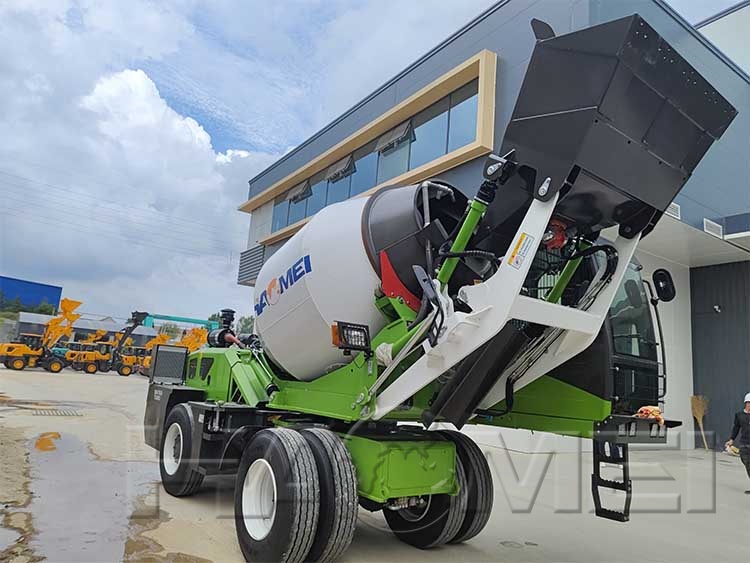
 A self loading truck mixer combines aggregate loading, cement batching, water dosing, mixing, and concrete transport in one mobile machine. It is increasingly considered for remote projects, small-to-medium pours, rural roads, precast work, housing foundations, and sites where ready-mix truck access is limited.

The questions below reflect the practical, high-intent wording commonly used in English-language search and social Q&A discussions. The answers focus on factors that matter before selecting a machine, rather than repeating generic product claims.

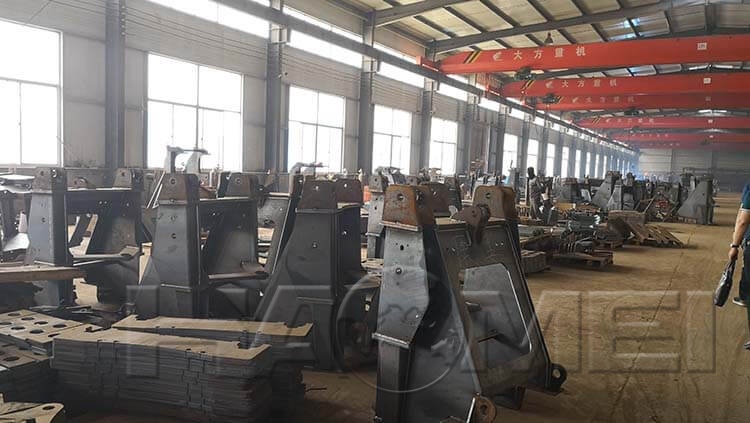
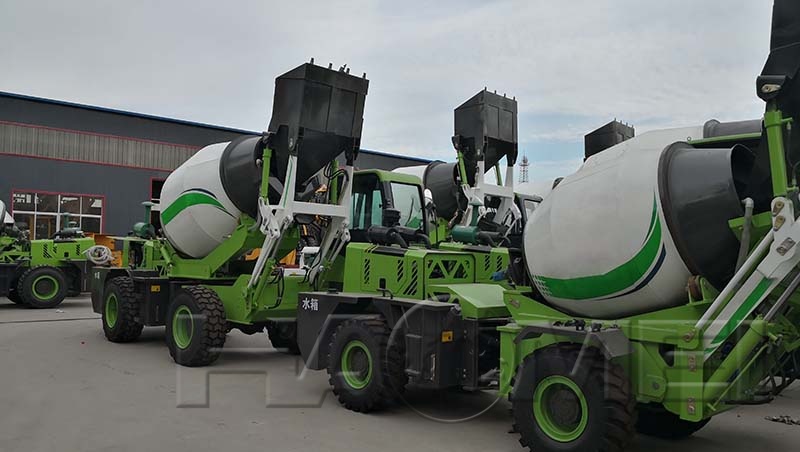
self loading concrete mixer factory

1. Is a self loading truck mixer worth it for small and remote concrete projects?

It can be worthwhile when the project regularly needs fresh concrete but has unstable access to commercial batching plants. The strongest advantage is not simply mobility. It is the ability to produce concrete when the crew is ready, rather than timing labor around ready-mix delivery slots.

A self loading truck mixer is especially practical when a site has limited road access, several separated work zones, or pours that are too small to justify repeated ready-mix deliveries. It can also reduce dependence on a wheel loader, a stationary mixer, and a separate transit truck because one operator can load materials, mix, and discharge concrete near the work area.

However, it is not automatically the right choice for every operation. If a project requires a large continuous pour with dozens of cubic meters per hour, a batching plant and multiple transit mixers may be more efficient. A self loading unit works best where flexibility, transport independence, and controlled small-batch production have greater value than high-volume continuous output.

Project ConditionSelf Loading Truck Mixer FitReason
Remote housing foundationsStrongMaterials can be batched on site as needed.
Narrow rural roadsStrongThe machine can avoid reliance on large transit trucks.
Small daily concrete demandStrongReduces minimum-order and waiting-time concerns.
Large bridge deck pourLimitedHigh-output plant systems may maintain supply better.
Multiple small work areasStrongConcrete can be produced closer to each pour location.

For operations comparing machine types, a Self Loading Mixer is generally most useful when daily production needs are variable and access conditions are difficult.

2. How much concrete can a self loading truck mixer make in one day?

Daily output depends on drum capacity, actual batch yield, loading speed, haul distance inside the site, material availability, operator experience, and cleaning time. The capacity printed on a machine is not always the same as usable concrete output. A drum rated at a certain volume may have a lower practical yield after allowing space for proper mixing, aggregate moisture, and slump adjustment.

For example, a 3.5 m3-class unit may produce roughly 3 to 3.5 cubic meters per batch under normal conditions. If each complete cycle, including loading, mixing, travel, discharge, and return, takes 30 to 45 minutes, the realistic output is determined by how many full cycles can be completed without interruptions.

Potential owners should calculate output from the full working cycle, not drum volume alone. Ask these questions:

  • How far is the aggregate and cement storage area from the pour?

  • Can the machine load materials without waiting for another machine?

  • Is there enough water supply for repeated batches?

  • Does the site have a trained operator and a second worker for material control?

  • How often will the machine travel on steep, muddy, or uneven ground?

A production estimate should include a buffer for washout, inspection, refueling, and minor delays. Planning around an ideal cycle time can create unrealistic expectations on an active jobsite.

3. Can a self loading truck mixer produce concrete with consistent quality?

Yes, but consistency depends more on batching discipline than on the mixer alone. The machine can deliver repeatable concrete when aggregate grading, water quantity, cement dosage, mixing time, and operator procedures are controlled. If the operator estimates water by eye or loads inconsistent shovel quantities, even an advanced mixer cannot guarantee uniform results.

The most important quality-control habit is recording a repeatable recipe. For each concrete grade, establish the loading sequence, bucket count or weight target, cement amount, water setting, mixing duration, and expected slump. Moisture in sand is particularly important because wet sand already carries water into the drum. Without adjustment, the mix can become too wet and lose intended strength.

Before major structural pours, make a trial batch and test slump according to the project specification. For critical reinforced concrete work, arrange laboratory cube or cylinder testing where local standards require it. A self loading truck mixer supports on-site production, but it does not replace material testing or approved mix-design procedures.

self loading mixer factory

4. What size self loading truck mixer should I choose: 1.8 m3, 3.5 m3, or 4.0 m3?

Choose capacity based on the typical pour, not the largest pour you might complete once or twice a year. A machine that is oversized can increase fuel use, purchase cost, turning radius, and transport complexity. A machine that is too small can create excessive batch cycles and slow the crew.

A 1.8 m3 unit may suit repair work, small foundations, farm buildings, and light concrete tasks with limited daily demand. A 3.5 m3 machine is often a practical middle range for residential construction, local roads, drainage structures, and repeated foundation work. A 4.0 m3 model can better suit contractors handling larger slab sections and higher daily material movement.

The HM4.0 Self Mixer class is often considered where site access remains restricted but the operation needs more output than compact units can provide. Capacity selection should also account for machine width, turning space, axle load, terrain, and local road restrictions.

5. What maintenance problems should I expect with a self loading truck mixer?

Most preventable issues come from hardened concrete, neglected hydraulic checks, poor lubrication, and delayed replacement of wear components. Concrete residue is particularly damaging because it adds drum weight, reduces usable capacity, and can interfere with mixing blades and discharge movement.

Daily cleaning should include the drum interior, discharge chute, loading bucket, water system, and areas around moving joints. The hydraulic oil level, hoses, fittings, tire condition, brakes, and steering response should also be inspected before operation. On machines working in dusty or hot environments, radiator cleaning and engine air-filter maintenance become especially important.

Wear parts deserve planned inspection rather than emergency replacement. Mixing blades, bucket cutting edges, hydraulic seals, bearings, and chute liners can affect output and safety when worn beyond tolerance. Parts availability should be checked before purchase, especially for projects far from service centers.

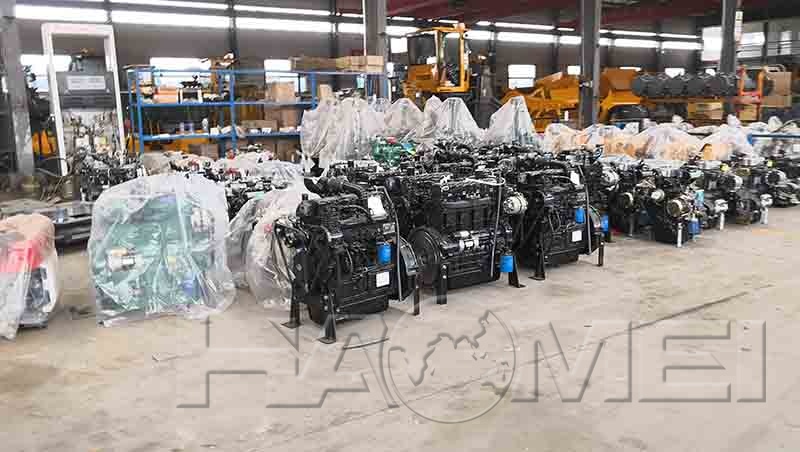
spare pars of self loading mixer

A practical maintenance schedule should separate daily cleaning, weekly lubrication, monthly hydraulic inspection, and periodic checks of drum blades, electrical connections, and braking components. This routine helps protect concrete quality, machine uptime, and long-term operating cost.

Original Source: https://www.self-loading-mixer.com/a/self-loading-truck-mixer.html

How to Choose The Right Mini Hot Mix Plant for a Contractor

  For small-to-medium-scale projects—such as road maintenance, rural road repairs, residential complex pavement resurfacing, and sporadic mu...