2026年10月12日星期一

4x4 Self Loading Concrete Mixer Truck

 4x4 self loading concrete mixer trucks are attracting attention in public Q&A discussions because they combine aggregate loading, water dosing, mixing, transport, and concrete discharge in one mobile machine. They are especially relevant for projects with changing pour locations, restricted access, or limited batching infrastructure.

The following questions reflect recurring English-language search and Q&A topics around self loading concrete mixers. The answers focus on practical equipment evaluation for contractors, rental fleets, farms, municipal work, and remote construction sites.
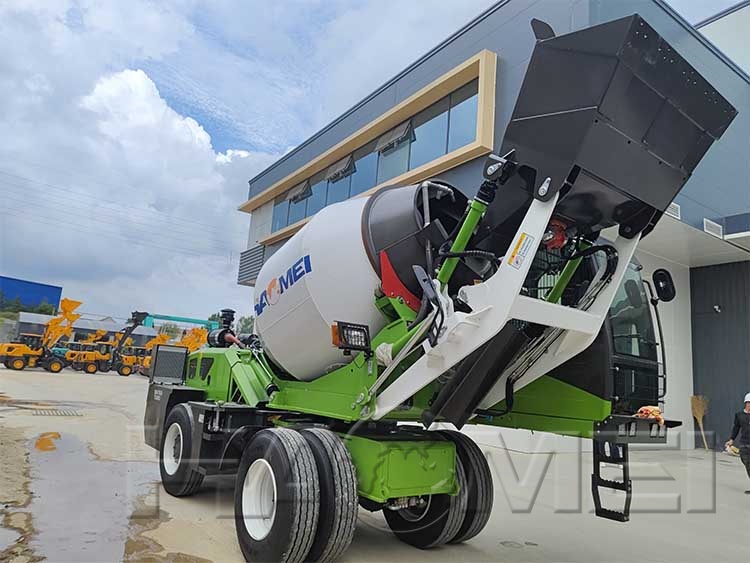
self loading concrete mixer truck

1. Is a 4x4 self loading concrete mixer truck suitable for rough or muddy jobsites?

Usually, yes, but 4x4 alone does not guarantee good jobsite performance. A capable machine needs suitable tire tread, adequate ground clearance, strong axle construction, and enough engine torque at low speed. The practical test is whether the unit can travel with a fully loaded drum over the same slopes, ruts, and soft areas present during the actual pour.

A 4x4 self loading mixer is often more adaptable than a conventional transit mixer on narrow rural roads, unpaved developments, drainage projects, and agricultural sites. Its articulated steering or compact turning radius can also reduce repeated reversing near forms and trenches.

However, operators should not treat it as a substitute for site preparation. Deep mud can pack around tires, wet clay can reduce steering response, and steep side slopes create instability when the drum is loaded. Establishing compacted travel lanes and a stable loading zone remains important.

Jobsite conditionWhat to check before selecting a 4x4 mixer
Loose gravelTire type, traction, braking control, and loaded climbing ability
Mud or wet clayGround clearance, tire self-cleaning pattern, and recovery access
Narrow access roadsOverall width, turning radius, steering design, and mirror visibility
Sloped terrainRated gradeability, drum position, parking brake, and rollover precautions
Remote sitesFuel capacity, water tank volume, and local service support

For smaller pours where access is extremely tight, an HM1.2 Self Mixer may be easier to position than a larger truck-style unit, provided its batch output matches the daily concrete requirement.

2. How much concrete can a self loading mixer actually produce in a day?

The drum capacity is not the same as daily production. A machine rated for a 3.5 m3 batch may produce much less than its theoretical maximum when aggregate piles are distant, water must be refilled, operators are inexperienced, or the site has slow discharge cycles.

A more realistic calculation considers usable batch volume, mixing time, travel time, loading time, discharge time, cleaning, and operator breaks. For example, a machine completing six 3 m3 batches in a shift produces about 18 m3, but this depends on an organized material layout and consistent aggregate supply.

Ask suppliers for the rated concrete output per batch rather than only drum volume. Wet concrete density, mix design, aggregate size, and drum loading limits all affect usable output. Overfilling the drum can reduce mixing uniformity and increase wear on hydraulic and drivetrain components.
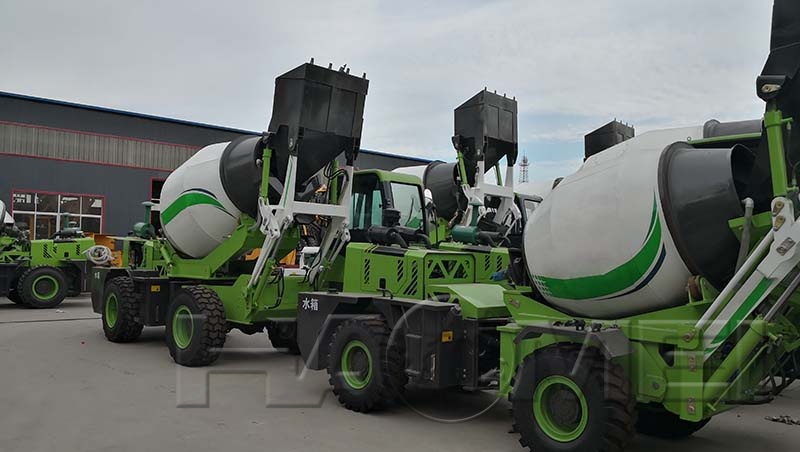
self loading mixer factory

3. Can 4x4 self loading concrete mixer trucks make concrete as consistent as a batching plant?

They can produce reliable site-mixed concrete when the loading sequence and water control are disciplined. The strongest advantage is that concrete can be mixed near the point of placement, reducing delays that may occur when ready-mix trucks travel long distances.

Consistency depends on measurement. Cement should be loaded by known bag count or weight, aggregate buckets should be filled consistently, and water should be measured rather than added by visual judgment. A water meter, calibrated tank, or repeatable dosing system helps prevent excessive water-cement ratios.

For structural work, use trial batches to verify slump, workability, and strength requirements before regular production begins. Record each batch recipe, including cement quantity, sand, stone, water, admixture, and mixing duration. This creates a repeatable process even when crews change.

A larger HM3.5 Self Mixer can suit medium-scale foundations, road repairs, and building projects where steady batch volume is needed without relying on a fixed plant.

4. What operating costs should be considered besides the purchase price?

Fuel is only one part of the cost. Potential owners should evaluate routine servicing, tire replacement, wear parts, hydraulic oil, filters, battery condition, operator training, and transport between projects. The loading bucket and drum blades are wear items because they repeatedly contact abrasive sand and stone.

Spare-parts availability can have a greater financial effect than a small difference in initial machine price. A low-cost unit becomes expensive if a failed hose, sensor, bearing, or hydraulic component stops a project for several days. Before selecting a model, ask which parts are held locally, normal lead times, and whether service technicians can support field repairs.

Cost areaQuestions to ask
FuelWhat is consumption per operating hour and per cubic meter?
Wear partsHow often are drum blades, bucket edges, and tires replaced?
ServiceAre filters, belts, hoses, and seals readily available?
LaborCan one trained operator handle loading, mixing, and discharge safely?
DowntimeIs there technical support and a practical parts supply plan?

5. What maintenance matters most on a self loading concrete mixer truck?

Cleaning after every shift is essential. Hardened concrete inside the drum, discharge chute, bucket, and water lines adds weight, reduces capacity, and accelerates corrosion. Do not allow concrete residue to build up because removal later may require mechanical chipping that can damage painted or welded surfaces.

Daily inspections should include engine oil, coolant, hydraulic oil, tire pressure, brake response, lights, water system operation, drum rotation, and visible hose leaks. Grease points need attention according to the manufacturer schedule, especially around steering joints, loader pivots, and articulated chassis sections.
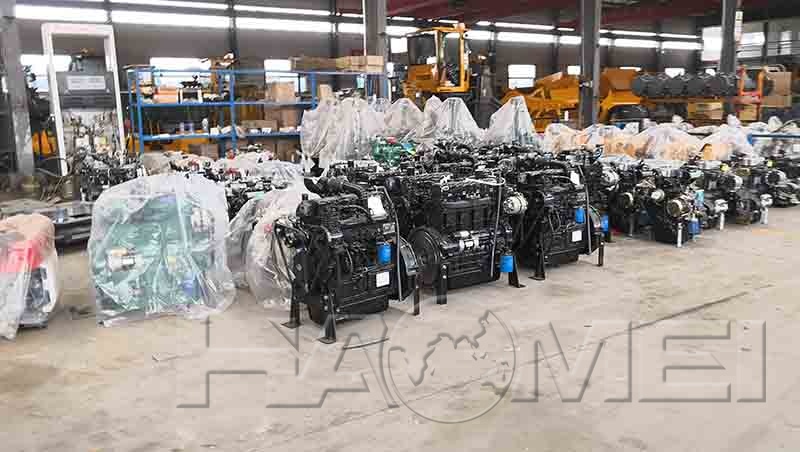
spare pars of self loading mixer

Before the first pour of each day, run the mixer empty and listen for unusual vibration, delayed drum response, or hydraulic noise. These early signs can indicate loose fasteners, low fluid levels, worn bearings, or contamination in the hydraulic system. A documented inspection routine helps keep a 4x4 self loading concrete mixer truck productive during demanding site work.

Original Source: https://www.self-loading-mixer.com/a/4x4self-loading-concrete-mixer-trucks.html

Concrete Mixer Pump Price

A concrete mixer pump combines on-site mixing and concrete delivery in one machine. Its purchase cost can look attractive compared with arranging separate mixers, pumps, and ready-mix deliveries, but the lowest quoted figure rarely represents the lowest project cost.

Equipment selection should begin with the placement task, not the advertised price. Required output, aggregate size, delivery distance, access conditions, power source, and service coverage can change both the initial investment and the cost per cubic meter placed.

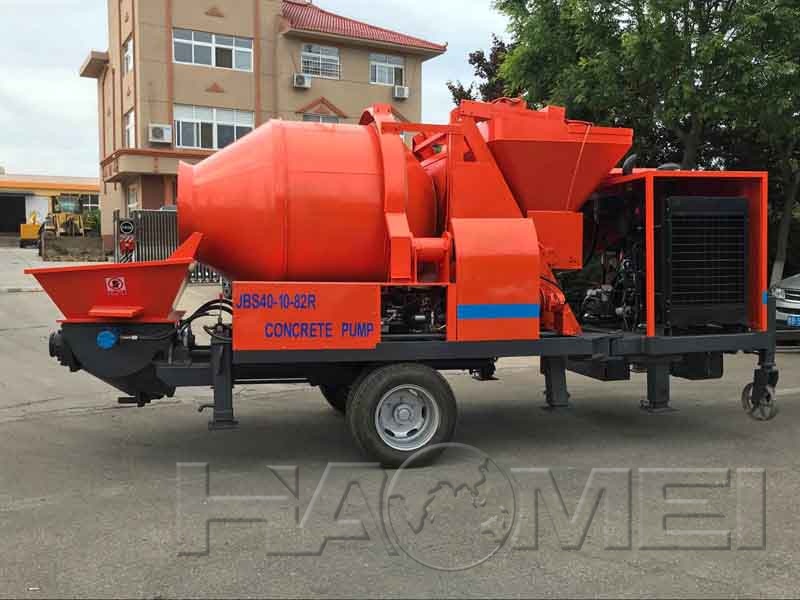
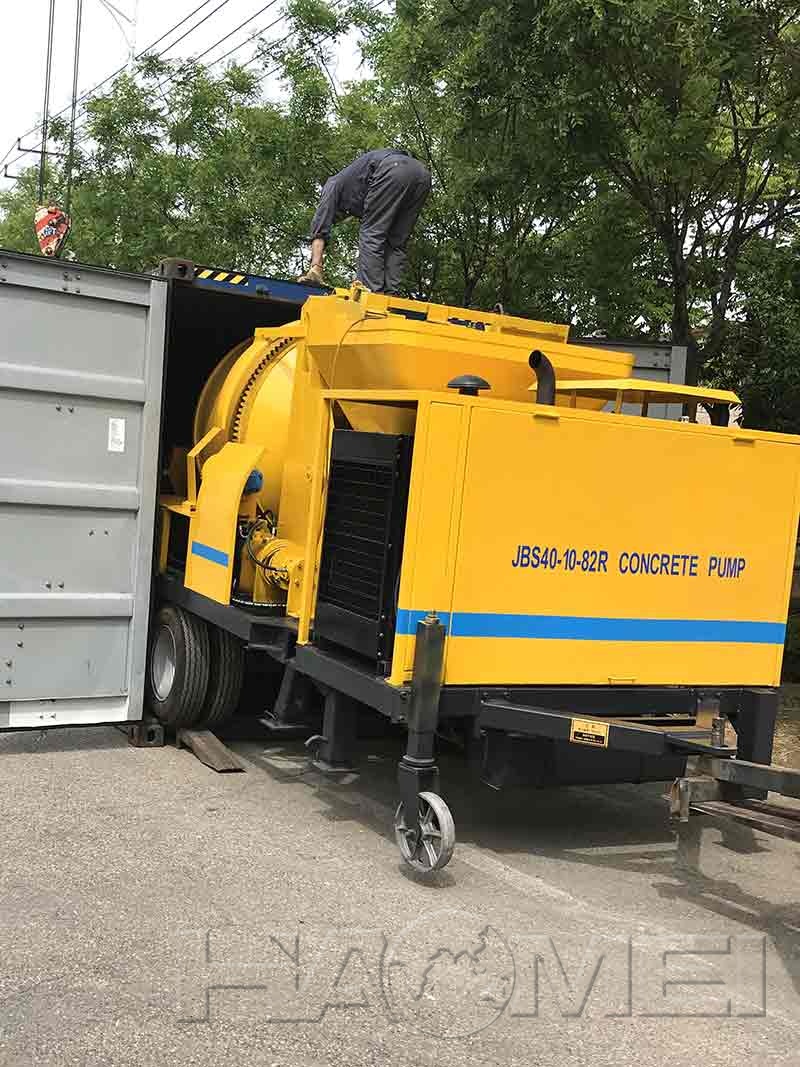
concrete mixer pump

Compare Price Quotes on the Same Technical Basis

A mixer pump quote is only comparable when the machines have equivalent capacities and included equipment. A compact unit designed for small foundations is not directly comparable with a higher-output diesel machine intended for rural housing projects or long hose runs.

Ask every supplier to provide a signed specification sheet with rated mixer capacity, theoretical pumping output, maximum aggregate size, pumping pressure, engine or motor rating, delivery-line diameter, hopper capacity, dimensions, weight, and warranty terms.

Quote itemWhy it affects investment costWhat to confirm in writing
Pumping systemHydraulic pump type, cylinder diameter, and pressure determine usable delivery capability.Theoretical output, maximum pressure, valve type, and rated aggregate size.
Mixing systemDrum or pan configuration affects batch volume, mixing time, and wear parts.Charging capacity, discharged capacity, mixer drive arrangement, and liner material.
Power sourceDiesel units suit remote work; electric units may reduce site emissions and fuel handling.Engine brand and emissions configuration, or voltage, frequency, and installed motor power.
Delivery packageHoses, clamps, elbows, reducers, and pipeline supports can materially increase the delivered amount.Hose length, diameter, pressure rating, couplings, and included accessories.
Transport and supportFreight, commissioning, spare parts, and technician response time are often excluded from headline figures.Incoterms, taxes, destination charges, training, warranty, and local service location.

Do not compare advertised factory pricing with a delivered, commissioned offer. Build a landed-cost worksheet:

Equipment + options + transport + duties/taxes + commissioning + hoses/pipeline + initial spares + operator training = project-ready cost

For a new machine, request at least three like-for-like quotations. For used equipment, add an inspection allowance and obtain maintenance records. A lower-cost used unit can become expensive quickly if concrete cylinders, hydraulic pumps, S-valves, wear plates, mixer liners, or diesel injection components need replacement.

A practical specification starting point is a Concrete Mixing Pump matched to the planned daily pour volume and actual pipeline route. Avoid sizing only from theoretical output. The usable rate depends on concrete workability, aggregate grading, hose layout, operator loading speed, cleaning time, and stoppages.

Select Capacity From the Placement Scenario

First, map the concrete route from the mixing location to the furthest placement point. Record horizontal distance, vertical lift, bends, hose diameter, access for the machine, and available power or fuel storage. Every bend, reducer, and vertical rise increases resistance and affects output.

The table below helps separate common applications.

Site conditionSuitable equipment directionSelection check
Small houses, footings, columns, narrow accessCompact mixer pump or mini configurationConfirm gross weight, tow arrangement, hose reach, and space for aggregate and cement loading.
Remote projects without reliable grid powerDiesel-powered machineVerify fuel consumption under load, engine service support, and local fuel quality requirements.
Urban sites with utility power and noise restrictionsElectric machine where supply is adequateConfirm voltage, frequency, breaker capacity, cable sizing, and local noise limits.
Repeated low-rise structural poursMid-capacity mixer pump with planned pipelineConfirm output against pour schedule and keep sufficient line-cleaning equipment on site.

For constrained sites, a Mini Concrete Mixer with Pump can reduce transport and setup demands. It still requires a stable setup area, safe material-loading process, and enough room to route hoses without creating trip hazards or crushing points.

concrete mixing pump

Concrete quality is part of pump selection. ASTM C94/C94M covers ready-mixed concrete requirements, while project specifications define the approved mix design. For site-batched concrete, follow the approved mix proportions and control water addition. Excess water may make concrete appear easier to pump, but it can reduce strength and increase segregation risk. Confirm that aggregate size and grading comply with the pump manufacturer's stated limits and the approved mix design.

Control Operating Cost, Downtime, and Safety Exposure

Initial purchase cost is only one part of ownership. Track the following values from the first pour:

Cost or performance measureHow to measure itManagement action
Fuel or electricity per cubic meterRecord energy used and concrete placed each shift.Compare similar pours and investigate abnormal increases.
Output per hourDivide accepted placed volume by active placement time.Identify delays from batching, hose moves, or line blockages.
Wear-part costLog cylinders, seals, plates, cutting rings, liners, and agitator parts.Schedule replacements before failure stops a pour.
Cleaning time and water useRecord washout labor and water volume.Set a controlled washout location and cleaning procedure.
DowntimeRecord fault, duration, cause, and corrective action.Stock fast-moving consumables and verify service response commitments.

A simple operating-cost calculation is:

Cost per cubic meter = (fuel or power + labor + maintenance + wear parts + transport allocation + financing allocation) / accepted concrete volume placed

Use accepted placed volume rather than theoretical output. This prevents an overstated productivity figure from masking poor field performance.

Before each shift, inspect hydraulic hoses for damage or leaks, check fluid levels, verify guards and emergency stops, inspect hose couplings and safety pins, and confirm that the delivery line is restrained and supported. Never stand in front of, or over, a pressurized hose end. Depressurize the system before opening any pipeline connection or clearing a blockage.

In the United States, construction employers should evaluate applicable OSHA requirements in 29 CFR 1926, including Subpart Q for concrete and masonry construction. Local lifting, transport, emissions, electrical, and operator-competency rules may also apply. The machine manual, approved risk assessment, and site-specific method statement should control operating procedures where they are stricter.

Use this pre-purchase checklist during supplier evaluation:

  • Match rated output and pressure to the longest planned delivery route.

  • Obtain a full delivered-cost quote, not a factory-only figure.

  • Confirm local parts stock for high-wear pumping and mixing components.

  • Require commissioning, operator familiarization, and maintenance documentation.

  • Check emissions, electrical supply, road-towing, and jobsite compliance requirements.

  • Evaluate the supplier's response time for hydraulic, engine, and control-system faults.

  • Plan washout, slurry containment, and safe disposal before the first concrete pour.

Original source: https://www.concrete-pump-cn.com/a/concrete-mixer-pump-price.html

How to Choose a Right Asphalt Mixing Plant Supplier For Your Project

 Amid the ongoing global surge in infrastructure development, demands regarding the stability, adaptability, and cost-effectiveness of asphalt equipment are rising for highway, airport, port, and municipal renovation projects. As the core machinery in road construction, asphalt mixing plants directly determine mixture quality, construction efficiency, and overall project profitability.

For contractors operating in Southeast Asia, Africa, Europe, the Middle East, Latin America, and beyond, selecting the right supplier is not merely a matter of procurement; it is crucial for mitigating overseas operational risks and ensuring successful project execution.

asphalt mixing plant supplier.jpg

I. Five Key Dimensions for Supplier Selection

Infrastructure standards, environmental regulations, construction environments, and budget frameworks vary significantly across the globe. Consequently, global procurement cannot rely on a "one-size-fits-all" way to choose an asphalt mixing plant supplier; instead, a comprehensive evaluation based on five core dimensions is required to meet the diverse needs of overseas projects.

1. Equipment Suitability and Regulatory Compliance

Equipment suitability is the prerequisite for successful overseas deployment. Contractors must select models based on project scale: mobile mixing plants are ideal for small-scale municipal projects, whereas large-scale infrastructure projects require high-capacity stationary or modular equipment. Furthermore, the equipment must be adapted to specific regional conditions, capable of withstanding complex environments such as extreme cold, high humidity, dust, and high temperatures. Compliance with local regulations is also mandatory; prioritizing suppliers with international certifications—such as CE, ISO, and EAC—helps mitigate compliance risks and ensures smooth commissioning.

2. Technical Capability and Equipment Quality

The precision of mixture proportioning, mixing uniformity, and temperature control stability directly determine the service life of the road. Top-tier suppliers provide intelligent metering, efficient drying and heat exchange, and fully automated control systems to effectively lower energy consumption and minimize material variances. Additionally, core components must be wear-resistant, corrosion-resistant, and durable enough to withstand the high-intensity, long-duration operations typical of remote overseas sites, thereby reducing equipment failure rates.

3. Global Delivery and Supply Chain Capabilities

Delayed delivery is a common pain point in overseas projects. A reliable supplier must possess a mature cross-border delivery system, stable production capacity, standardized maritime packaging, and professional port logistics channels. They must be capable of efficiently handling intercontinental transport and customs clearance, ensuring the timely delivery of various bulk and customized orders without delaying project schedules.

4. Comprehensive Global After-Sales Support

Difficulty in equipment repair and slow spare parts replenishment overseas are critical challenges in construction. A high-quality supplier must establish a robust global service network, offering full-lifecycle services—such as remote diagnostics, on-site installation and commissioning, regular maintenance, and rapid parts supply—to respond quickly to equipment issues and minimize losses caused by project downtime.

5. Comprehensive Cost-Effectiveness

Global project budgets vary significantly; equipment selection should avoid the pitfalls of a "race to the bottom" on price or blindly opting for high-priced brands. By comprehensively considering procurement, energy consumption, maintenance, and replacement costs, one should prioritize products with the best total-cost-of-ownership value. This balances quality and cost, making the equipment suitable for overseas infrastructure projects of all scales.

II. Core Global Advantages of Chinese Asphalt Mixing Plant Suppliers

China asphalt mixing machine is currently exported to over 80 countries and regions worldwide. Leveraging advantages across the entire industrial chain, mature technology, and flexible service models, these suppliers have broken the monopoly held by overseas brands and become the preferred partners for global infrastructure contractors.

1. High Cost-Performance Ratio

China possesses a complete construction machinery industrial chain, achieving full localization of both component manufacturing and final assembly, which significantly reduces production costs. Equipment of comparable specifications is priced at only one-third to one-half of that from European or American brands—free from high brand premiums—while also offering lower energy consumption and maintenance costs. This allows the equipment to meet the quality standards of high-end benchmark projects while also satisfying the low-cost requirements of inclusive infrastructure projects in Asia, Africa, and Latin America.

2. Mature Technology Meeting International Quality Standards

Leading domestic manufacturers have cultivated deep industry expertise and continuously iterated their equipment technology. Features such as intelligent metering, energy-efficient drying, remote operations and maintenance, and environmental control systems have all reached advanced international levels. All exported equipment undergoes multiple authoritative international certifications, ensuring direct compliance with the construction and environmental standards of most countries without the need for further modification.

3. Highly Customizable to Suit Complex Global Operating Conditions

Chinese suppliers can precisely tailor equipment solutions to diverse global construction environments: upgrading anti-freezing and thermal insulation systems for frigid regions; optimizing moisture- and rust-proofing for hot, humid areas; reinforcing dust-proofing and heat dissipation structures for dusty, high-temperature sites; and providing modular, quick-assembly equipment for remote locations—ensuring comprehensive adaptability to complex construction scenarios worldwide.

4. One-Stop Cross-Border Delivery and After-Sales Support

Leveraging mature domestic logistics networks, Chinese suppliers (such as Haomei Machinery) facilitate rapid maritime delivery and professional customs clearance. They offer a comprehensive service package—spanning solution customization, equipment manufacturing, cross-border transport, installation and commissioning, personnel training, and lifelong maintenance—complemented by remote intelligent monitoring systems that provide early warnings for equipment faults, effectively resolving after-sales challenges for overseas clients.

5. Green and Intelligent: Aligned with Global Infrastructure Trends

Domestically produced equipment incorporates eco-friendly technologies such as bag-type dust collection, variable-frequency energy-saving systems, and exhaust gas recovery; emission standards exceed EU requirements, ensuring compliance with stringent global environmental regulations.

Furthermore, features such as fully automated unmanned operation, remote data monitoring, and intelligent fault early warning help overseas projects reduce costs and boost efficiency, aligning with the global shift toward intelligent and green infrastructure development.

Original source: https://www.haomei-machinery.com/a/how-to-choose-a-right-asphalt-mixing-plant-supplier-for-your-project.html

How Far Can Concrete Pump Truck Reach

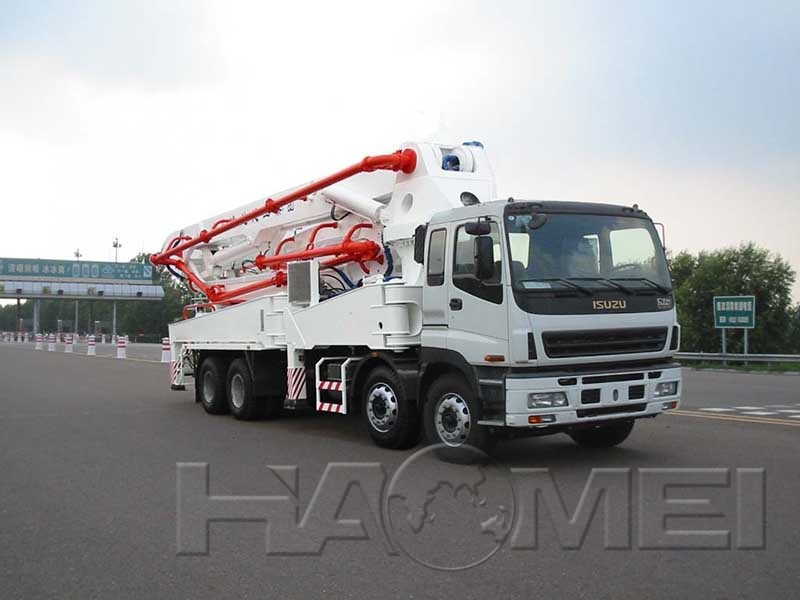
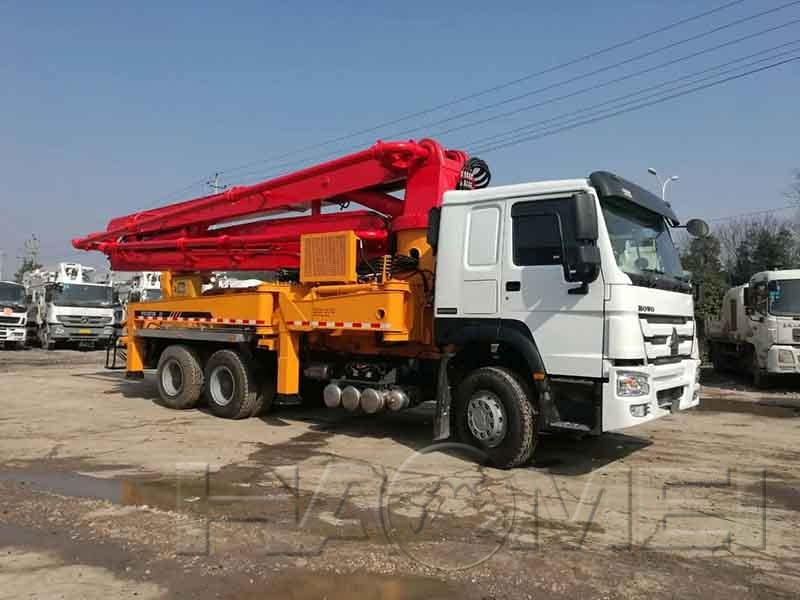
 A listed boom length is not the same as the usable placing area. Concrete pump truck reach depends on boom geometry, truck position, outrigger footprint, elevation changes, hose length, and obstructions. Selecting solely by a 37 m, 45 m, or 52 m class can leave part of a slab inaccessible or create an unsafe setup.

For each project, start with a site drawing and mark the truck's possible setup points. Then test whether the boom can place concrete at the furthest point without stretching the end hose, crossing prohibited areas, or operating close to overhead power lines.

concrete boom pump

Measure the Actual Placing Envelope

Manufacturers publish a boom's nominal vertical reach, horizontal reach, and depth reach. These values are useful comparisons, but they are measured under defined manufacturer conditions. They do not replace a jobsite placement plan.

Horizontal reach is normally the most important dimension for slabs, foundations, and large floor plates. Vertical reach matters for elevated decks, walls, and high-rise work. Depth reach matters for basements, pits, and below-grade structures.

Use this pre-selection checklist:

  • Obtain the current manufacturer's dimension sheet for the specific chassis and boom configuration.
  • Measure from the planned truck centerline, not from the site gate or property boundary.
  • Plot buildings, scaffolds, cranes, retaining walls, excavation edges, and utility corridors.
  • Confirm that the boom can reach the farthest pour point while maintaining practical boom articulation.
  • Allow for the placing hose. The hose extends placement flexibility, but it should not be used to compensate for an undersized boom.
  • Check whether the truck can reposition during the pour without creating cold joints or interrupting concrete supply.
Boom classTypical best-fit workMain reach limitation to checkSetup consideration
28 m to 32 mHouses, low-rise work, confined urban sitesLimited coverage across wide slabsOften easier to position, but still needs full stabilizer support
36 m to 42 mCommercial slabs, warehouses, mid-rise workMay require relocation on deep floor platesCompare front and rear outrigger spread
43 m to 52 mLarge slabs, elevated decks, larger projectsGreater boom reach can increase setup space and transport constraintsGround bearing capacity becomes more critical
56 m and aboveMajor infrastructure, high-rise, large industrial sitesSite access, traffic control, and restricted setup zonesRequires detailed logistics and engineered support planning

A 37 Meters Concrete Pump Truck For Sale can suit projects where access roads and setup areas are tight, while a larger boom may reduce truck repositioning on broad commercial slabs. The correct choice depends on the measured placement envelope, not the maximum stated boom length.

32 meter concrete pump

Check Setup Space, Ground Conditions, and Safety

A long boom does not add value if outriggers cannot be fully deployed. Outrigger span can exceed the apparent width of the truck substantially. Request the manufacturer's support dimensions for each outrigger mode, including one-sided or reduced-spread modes where available. Reduced-spread operation may also affect the permitted working range, so follow the load and stability information supplied with the machine.

Before setup, the competent site team should assess these conditions:

Site conditionRiskPractical control
Backfilled ground or soft shouldersSettlement or overturningUse suitable outrigger pads and verify ground bearing capacity
Excavation edgeCollapse or loss of supportKeep equipment away from the edge based on the excavation plan and soil assessment
Suspended slabs or basement decksStructural overloadObtain written confirmation of allowable loads from the responsible engineer
Overhead linesElectrocution or arcingIdentify voltage, establish clearances, and coordinate with the utility owner
Public road setupVehicle strike and blocked emergency accessUse a traffic management plan and approved exclusion zone

In the United States, OSHA 29 CFR 1926.702 addresses concrete construction, including the requirement that no construction loads be placed on a concrete structure unless the employer determines it can support the loads. OSHA's excavation requirements at 29 CFR 1926 Subpart P also apply where setup is near trenches or excavations. Local rules, utility-owner requirements, and the pump manufacturer's operating manual may impose additional controls.

Pump operators should establish a restricted area around the boom and delivery hose. The crew must never stand under the boom, place hands near pinch points, or open a pipeline while pressure remains. The American Concrete Pumping Association publishes safety resources that emphasize communication, pipeline inspection, proper stabilization, and controlled line cleaning.

Match Reach to Output, Ownership Cost, and Fleet Strategy

Reach alone does not determine production. A boom truck must also match the concrete mix, line diameter, pumping pressure, hopper capacity, and planned delivery rate. High-strength mixes, harsh aggregates, long pipelines, and vertical pumping increase resistance. Review the manufacturer's pump performance curves rather than assuming maximum theoretical output will be achieved on every pour.

For a 45 m class machine, compare the boom diagram, pump cell output, maximum pressure, and chassis axle configuration. A 45 Meter Concrete Boom Truck is often considered for projects needing broad slab coverage, but its value depends on whether the jobsite has enough access width, setup area, and concrete supply capacity to keep it productive.

Use this investment screen before choosing a machine:

Decision factorWhat to request or calculate
UtilizationExpected pumping hours, pour days, seasonal demand, and standby time
Revenue fitLocal demand by boom class, customer project types, and travel radius
TransportGross vehicle weight, axle loads, permits, road restrictions, and site access routes
Operating costFuel, wear parts, hydraulic oil, lubrication, tires, inspections, insurance, and operator labor
Service supportParts availability, technician response time, remote diagnostics, and warranty terms
Residual valueBrand support, maintenance history, hours, boom condition, and local resale demand

Do not compare purchase price alone. A larger unit may reduce setups and labor on suitable sites, but it can bring higher capital cost, transport constraints, insurance exposure, and maintenance expense. Ask suppliers for a written specification covering boom dimensions, outrigger spread, pump output, pressure, hopper volume, chassis details, and warranty coverage.

Digital fleet tools can improve reach planning and operating control. Telematics data such as engine hours, pumping hours, fuel use, fault codes, lubrication alerts, and location history help managers schedule preventive maintenance and identify underused equipment. Pair those records with pour reports that document concrete volume, setup time, pump time, downtime cause, and repositioning events. This creates a practical record for deciding whether the next machine should have more reach, higher output, or a more compact setup footprint.

Original source: https://www.concretebatchplanthm.com/a/concrete-pump-truck-reach.html

4x4 Self Loading Concrete Mixer Truck

  4x4 self loading concrete mixer trucks are attracting attention in public Q&A discussions because they combine aggregate loading, wate...