2026年7月28日星期二

3.5 m3 Self Loading Concrete Mixer Truck

 Recent English Q&A discussions on Quora, Google, Reddit-style forums, and construction equipment communities show steady interest in the 3.5m3 self loading concrete mixer. People are not only asking about price. They want to know whether this machine can replace a small batching plant, how much concrete it really produces per hour, what site conditions it suits, and what to check before ordering.
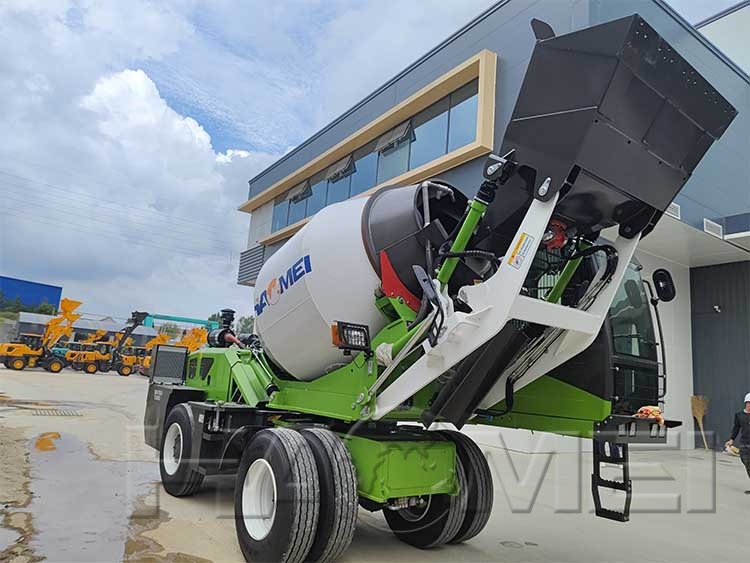
self loading mobile concrete mixer machine

Below are 5 high-interest questions phrased in the way new equipment purchasers commonly ask them, followed by practical answers written for real jobsite decisions.

1. Is a 3.5m3 self loading concrete mixer enough for road, house, and foundation projects?

Yes, a 3.5m3 self loading concrete mixer is usually enough for small and medium construction work, especially when the site needs flexible concrete supply rather than continuous large-volume pouring. It combines loading, weighing, mixing, transport, and discharge in one machine, so it is often chosen for rural roads, villa foundations, drainage channels, sidewalks, small bridges, farm construction, and remote projects.

The 3.5m3 figure usually refers to drum output capacity per batch. In practical work, the usable output depends on material loading speed, mixing time, travel distance, discharge method, operator skill, and site organization.

Project typeSuitability of 3.5m3 modelPractical note
Rural road pavingHighGood when batching plant access is limited
House foundationHighSuitable for repeated moderate pours
Warehouse slabMediumCheck total daily concrete demand first
Large bridge deckLow to mediumUsually needs larger supply planning
Remote mountain siteHighStrong value where transit mixers struggle

If your work often needs 20 to 80 cubic meters per day with changing locations, a HM3.5 Self Mixer is a practical size to evaluate. If your concrete demand is much lower, a smaller model may save fuel and purchase cost.

2. How many cubic meters per hour can a 3.5m3 self loading concrete mixer produce?

A common question is whether the machine can produce 14 cubic meters per hour because 3.5m3 multiplied by 4 batches equals 14m3. In reality, production is not only drum capacity. One complete cycle includes loading aggregates, adding cement and water, mixing, driving to the pour point, discharging, returning, and sometimes washing the chute.

For many sites, a realistic range is about 10 to 14m3 per hour under smooth working conditions. If the loading point and pouring point are far apart, output may fall to 7 to 10m3 per hour. If materials are well arranged and the operator is experienced, the higher end is more achievable.

ConditionLikely hourly output
Materials close, short travel, trained operator12 to 14m3
Normal site layout with moderate travel9 to 12m3
Rough ground or long travel distance7 to 10m3
Frequent slump adjustment or waiting timeBelow 9m3

A smart way to estimate your output is to time one complete batch cycle, not just the mixing time. If one full cycle takes 20 minutes, the machine can complete about 3 cycles per hour. At 3.5m3 per cycle, that equals about 10.5m3 per hour.

3. What price range should I expect for a new 3.5m3 self loading concrete mixer?

Prices vary widely by engine brand, hydraulic system, weighing accuracy, transmission type, cabin design, drum rotation system, tire specification, export configuration, and after-sales support. In Q&A discussions, many people ask for a single number, but a reliable quote needs at least the destination country, emission requirement, preferred options, and shipping method.

Common price factors include:

Price factorWhy it matters
Engine brandAffects power, fuel use, maintenance, and parts access
Hydraulic componentsInfluences lifting, steering, drum rotation, and service life
Weighing systemHelps control mix consistency and material cost
4-wheel driveImportant for muddy, sloped, or remote sites
Cabin and air conditionerImproves operator comfort in hot regions
Spare parts packageReduces downtime after delivery

self loading mixer factory

Instead of comparing only the lowest price, compare configuration sheets line by line. Two machines may look similar online, yet differ in axle strength, hydraulic pump quality, steel thickness, engine standard, and warranty response. A broader Self Loading Mixer range can also help you compare 3.5m3 against smaller and larger capacities before deciding.

4. Can a 3.5m3 self loading concrete mixer replace a concrete batching plant?

It can replace a small batching plant in some situations, but not all. The machine is strongest when mobility, quick setup, and independent operation are more important than mass production. It does not need a fixed foundation like a batching plant, and it can move with the project as work sections change.

However, for high-volume commercial concrete supply, a batching plant is still better. A plant gives stronger continuous output, more storage, and easier multi-truck dispatch. The self loading mixer is better for contractors who need to produce concrete directly at multiple points without relying on ready-mix delivery.

A 3.5m3 model makes sense when:

  • The project is far from a ready-mix plant.

  • Concrete demand changes by day.

  • Road access is narrow or poor.

  • Labor is limited.

  • You want one machine to load, mix, move, and pour.

  • The pour volume is moderate rather than massive.

It may not be the best match when the job requires continuous large pours above 100m3 per day, strict commercial batching records, or multiple grades of concrete supplied at the same time.

5. What maintenance should I plan before operating a 3.5m3 self loading concrete mixer?

Maintenance planning should start before the machine arrives. Many new owners focus on drum size and price, but downtime often comes from small parts, poor cleaning habits, and lack of operator training.

The most important daily habits are checking engine oil, hydraulic oil, coolant, tire pressure, water pump condition, grease points, brake function, and drum rotation. After each work shift, wash the drum, chute, and loading bucket before concrete hardens. Hardened concrete increases weight, damages mixing efficiency, and can reduce drum life.
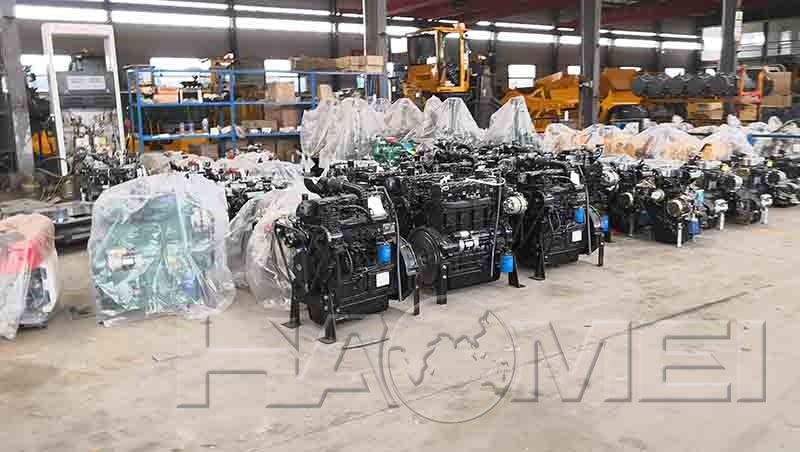
spare pars of self loading mixer

Maintenance itemSuggested routineRisk if ignored
Drum cleaningAfter every shiftHardened concrete buildup
Hydraulic oil checkDaily visual checkWeak lifting or steering problems
GreasingAs specified by supplierFaster pin and bearing wear
Tire inspectionDailyPoor traction and unsafe travel
Water system checkDailyIncorrect slump and delayed mixing
Spare parts stockBefore first projectLong downtime during repair

For a first order, ask the supplier for filters, seals, hydraulic hoses, wear parts, sensors, and vulnerable electrical parts. Also request operator training materials covering loading sequence, water measurement, mixing time, safe driving speed, slope limits, and emergency procedures.

A 3.5m3 self loading concrete mixer is most valuable when its capacity matches the job rhythm. Before ordering, calculate daily concrete demand, batch distance, road condition, fuel availability, local service support, and operator skill. These checks help the machine produce steady concrete instead of becoming an expensive vehicle parked on site.

Original Source: https://www.self-loading-mixer.com/a/35m3-self-loading-concrete-mixer.html

Sicoma Concrete Mixer Design, Materials, Benefits, and Fixes

 A Sicoma concrete mixer is widely associated with high-output batching plants, precast concrete lines, and ready-mix production where fast mixing, stable discharge, and long service life matter. For equipment purchasers comparing mixing machines, the value is not only in rated capacity. The real value is found in how the drum body, shafts, arms, liners, seals, and drive system work together under heavy aggregate impact and repeated daily cycles.

Most Sicoma-style twin-shaft mixers use two horizontal shafts with synchronized mixing arms. This layout creates strong material exchange across the mixing trough, helping cement, sand, stone, water, and admixtures reach uniform distribution in a short cycle. Exact specifications vary by model and configuration, so capacity, motor power, liner material, and discharge form should always be checked against the current manufacturer data sheet.

sicoma concrete mixer

Cutting-Edge Design Details That Improve Mixing

The main design advantage of this type of mixer is the twin-shaft mixing pattern. Instead of relying on slow tumbling, the counter-rotating shafts push materials through overlapping mixing zones. Aggregate is lifted, cut, folded, and forced toward the center and sides of the trough. This reduces unmixed pockets and supports consistent concrete strength from batch to batch.

A strong mixing body is also important. The trough is usually built from thick steel plate with bolted or replaceable liners inside the wear area. Bolted liners are easier to change than welded wear plates, reducing downtime during scheduled service. The mixing arms and blades are arranged at calculated angles to move material both radially and axially, so the batch does not simply rotate in place.

Shaft-end sealing deserves special attention. Concrete slurry is abrasive and alkaline, and leakage around shaft ends can damage bearings. High-quality machines typically use multi-stage sealing, with mechanical sealing rings, grease protection, and external bearing placement. An automatic or centralized lubrication system helps keep the seal area supplied with grease, lowering the risk of dry running.

Design elementFunctionPractical value
Twin horizontal shaftsProduce intensive shear and cross-flowFaster uniformity and stable slump
Replaceable linersProtect the mixing troughLower structural wear and easier service
Angled mixing bladesMove material in several directionsFewer dead zones and more even blending
Multi-stage shaft sealsBlock slurry from entering bearingsLonger bearing and shaft-end life
Hydraulic or pneumatic discharge gateControls concrete releaseCleaner discharge and easier automation

The discharge gate is another detail that affects daily operation. A well-fitted gate should open smoothly, close tightly, and resist concrete buildup around the sealing surface. In automatic batching plants, the gate position sensor should communicate correctly with the control system to prevent premature feeding or incomplete discharge.

Material Selection and Equipment Advantages

A mixer used for commercial concrete must resist impact, abrasion, vibration, and chemical corrosion. Many twin-shaft mixers use abrasion-resistant steel or high-chromium cast iron liners in heavy-wear zones. Mixing blades may be made from wear-resistant cast alloy or steel with hard-facing, depending on the supplier and application. These materials help protect the body when mixing crushed stone, manufactured sand, dry concrete, or low-slump precast mixes.

Sicoma double shaft concrete mixer

ComponentCommon material choiceAdvantage in concrete production
Mixing troughHeavy welded steel structureStrong support under continuous load
Wear linersAbrasion-resistant steel or cast alloyReduced wear from sand and stone
Mixing armsCast steel or alloy steelHigh strength against impact load
BladesWear-resistant alloyLonger working life in abrasive mixes
Shaft sealsMetal, rubber, polyurethane, and grease barrier combinationsBetter protection for bearings

The operating benefits are easy to understand on a production site. Short mixing time can increase batch plant output without increasing the plant footprint. Consistent mixing quality reduces rejected batches, strength variation, and customer complaints. A rigid body and balanced shaft system can also reduce abnormal vibration when the machine is correctly installed and maintained.

For compact batching lines or lower output projects, a JS500 Concrete Mixer may be considered where site space and hourly demand are limited. For higher-capacity concrete plants, a JS2000 Concrete Mixer can be evaluated when larger batch volume and stronger production rhythm are required.

Another advantage is automation compatibility. The mixer can work with aggregate batching machines, cement silos, screw conveyors, water scales, admixture scales, and PLC control systems. When sensors and interlocks are properly installed, the operator can manage feeding, mixing, discharge, alarm display, and cycle timing from the control room.

Troubleshooting and Maintenance for Stable Operation

Even a well-designed mixer needs correct operation. Most problems are caused by poor lubrication, worn liners, loose bolts, incorrect feeding sequence, hardened concrete buildup, or delayed replacement of wear parts. The table below gives practical checks that maintenance teams can use during daily work.

Sicoma concrete mixer machine

SymptomPossible causeRecommended action
Longer mixing timeWorn blades, incorrect blade angle, overloaded batchCheck blade wear, adjust or replace blades, verify batch weight
Shaft-end leakageInsufficient grease, damaged seal rings, hardened slurryClean seal area, confirm lubrication flow, replace worn seals
Abnormal vibrationLoose foundation bolts, uneven loading, damaged bearingTighten bolts, check feeding sequence, inspect bearing temperature and noise
Discharge gate leaksWorn gate liner, concrete buildup, weak cylinder pressureClean gate edge, inspect sealing plate, check hydraulic or pneumatic system
Motor overloadExcess batch volume, dry material blockage, low voltageReduce batch load, remove blockage after lockout, test power supply
Uneven concreteShort cycle, wrong water timing, failed admixture dosingAdjust mixing time, inspect water scale, calibrate admixture pump

Daily maintenance should start before production. Operators should inspect the inside of the mixer only after power isolation and lockout procedures are applied. Check blade clearance, liner thickness, arm bolts, shaft-end grease, discharge gate movement, and the condition of the emergency stop device. Concrete left inside the trough should be washed out before it hardens, especially around the gate and shaft-end areas.

Maintenance intervalWork itemPurpose
Every shiftClean inner trough, check abnormal sound, confirm lubricationPrevent buildup and early wear
DailyInspect blade bolts, liner bolts, discharge gate sealAvoid loose parts and leakage
WeeklyCheck gearbox oil level, coupling condition, bearing temperatureProtect the drive system
MonthlyMeasure liner and blade wear, test sensors and limit switchesKeep mixing quality and automation accuracy
Scheduled shutdownReplace worn liners, seals, blades, and damaged armsRestore performance before failure

When troubleshooting electrical or hydraulic faults, do not guess from alarm codes alone. Verify the actual field condition: sensor position, cylinder stroke, cable connection, air pressure, oil pressure, and control signal. If the mixer suddenly stops under load, isolate power before opening inspection doors. After cleaning out material, rotate only according to the manufacturer operating procedure to avoid damaging the gearbox or shafts.

For abrasive aggregates, set a planned wear inspection interval instead of waiting for visible holes in the liners. Once liners become too thin, the mixing trough can be damaged, and repair cost rises sharply. Keeping spare blades, liner plates, seal kits, grease, and common fasteners in stock is a practical way to reduce downtime during peak concrete demand.

Original source: https://www.haomei-machinery.com/a/sicoma-concrete-mixer.html

Ready Mix Pump Truck VS Small Concrete Mixer Pump

In the field of concrete construction, choosing the right equipment can increase project efficiency by half and significantly reduce costs. Ready mix concrete pump trucks and small concrete mixing pumps are currently the two most commonly used pieces of equipment in construction, and many project managers often struggle with the choice when purchasing or renting them. What are the differences between them?

Ready mix concrete pump truck.jpg

I. Comparison of Core Functions

1. Ready-mixed concrete pump truck: Also known as a boom pump truck, it can only transport ready-mixed concrete and has no mixing capability, requiring a commercial concrete plant. Its hydraulic boom can flexibly extend and rotate, reaching a maximum length of tens of meters, allowing direct pouring over obstacles without the need for pipeline laying. The theoretical pumping capacity of conventional models is 50-100 m³/h, with stable continuous pumping, reducing cold joints during construction, and requiring only one operator. However, it has high requirements for concrete quality; segregation and substandard slump can easily clog the pipes.


2. Small concrete mixing pump: Integrates mixing and pumping, eliminating the need for a commercial concrete plant. It can directly pump qualified concrete after mixing raw materials such as sand, gravel, and cement on-site, achieving one-stop operation. It can adjust the mix ratio and slump according to needs, making it highly adaptable and even suitable for narrow spaces through pipeline installation. However, its efficiency is relatively low, with standard models having a pumping capacity of 20-60 m³/h, requiring 2-3 workers to complete the processes of feeding, mixing, and pumping.


II. Comparison of Applicable Projects

1. Ready-mixed concrete pump truck: Suitable for large-scale projects with high volume and efficiency requirements, such as the main structure pouring of large high-rise buildings, municipal bridges, roads, stadiums, large industrial plants, and commercial complexes.


These projects have open sites, facilitating boom deployment, and readily available ready-mixed concrete is readily available. However, it has strict site requirements; its advantages cannot be fully realized in narrow spaces or when ready-mixed concrete transportation is inconvenient.


2. Small concrete mixing pump: Primarily characterized by flexibility and self-sufficiency, suitable for small, remote, or site-restricted projects, such as rural self-built houses, town villas, small-scale municipal repairs, mountain roads, and small-scale water conservancy projects, as well as enclosed sites such as tunnels and basements.


These projects have small volumes, insufficient ready-mixed concrete coverage, or high transportation costs. The small size of the equipment and the ability to mix on-site can significantly reduce costs and avoid concrete waste.


III. Price Comparison

1. Ready-mixed concrete pump truck: High purchase cost. New 30-40 meter boom models cost $110,000-$280,000, high-end models exceed $400,000, and used ones cost $40,000-$140,000. Operating costs include ready-mixed concrete ($45-$75/m³), fuel ($30-$75/hour), professional operator salary ($1100-$1700/month), and annual maintenance costs of $3000-$7000. Rental fees are $110-$280 per day, suitable for short-term large-scale projects.


2. Small concrete mixer and pump: Affordable purchase price. New models cost $11,000-$42,000, and used ones cost $4000-$21,000. Low operating costs. On-site mixing materials are $15-$30 cheaper per m³ than ready-mixed concrete, fuel costs are $15-$45/hour, and it can be operated by ordinary workers ($700-$1100/month). Annual maintenance costs are $700-$2100. The daily rental fee is $40-$110, suitable for short-term use of small projects.

Original source: https://www.concrete-pump-cn.com/a/ready-mix-pump-truck-vs-small-concrete-mixer-and-pump.html

120 Yard Portable Concrete Batching Plant

 The 120 cubic yard mobile batching plant for sale is a popular model among medium-to-large-sized mobile mixing equipment, balancing high production capacity, flexible relocation, and stable mixing quality. It is widely used in infrastructure projects in many countries worldwide.

120 yard portable concrete batching plant.jpg

A 120 yard portable concrete batching plant has an equivalent capacity of approximately 91.75 cubic meters/hour, which is uniformly classified in the industry as a 90 cubic meter-class mobile concrete batching plant and is also the mainstream benchmark model for 90 m³/h mobile plants in overseas engineering tenders.

Core Configuration

The 120 cubic yard mobile batching plant's dominant position in the overseas market is primarily due to its twin-shaft concrete mixer, a standard core configuration for this model. This distinguishes it from single-shaft and drum mixers, making it suitable for producing high-strength, high-uniformity concrete.

This double horizontal shaft concrete mixer has a single-pot output of 1.5 cubic meters. Utilizing a symmetrical mixing structure with double-helix blades and synchronous counter-rotating mixing shafts, it rapidly and thoroughly mixes sand, cement, water, and admixtures, effectively resolving issues such as uneven mixing, segregation, and clumping in concrete.

Whether producing ordinary commercial concrete, high-strength engineering concrete, or specialty concrete with added fly ash and mineral powder, it achieves uniform mixing, ensuring the finished concrete meets all required standards for density and workability, satisfying the stringent construction standards of overseas projects.

Furthermore, the twin-shaft mixer features thickened wear-resistant liners and a high-strength mixing arm design, offering excellent wear and impact resistance. It is suitable for overseas construction environments with high levels of impurities in the aggregate and complex working conditions, exhibiting a low failure rate and simple maintenance. Coupled with a fully automatic control system, it can accurately proportion various raw materials and automate the entire mixing process, significantly improving construction efficiency and reducing labor costs.

Three Major Overseas Markets

1. Africa: Essential Equipment for Infrastructure Construction

Africa is the largest market for this type of concrete mixing plant, with Kenya, Tanzania, Zambia, Nigeria, and South Africa consistently ranking among the top buyers. In recent years, African countries have vigorously promoted highway reconstruction and expansion, municipal infrastructure, and housing construction projects. These projects are scattered, have flexible schedules, and often involve rudimentary on-site conditions, making stationary mixing plants extremely unsuitable.

The 120 yard meter mobile mixing plant, however, offers advantages such as no need for complex foundations, rapid installation and commissioning, and frequent relocation, perfectly adapting to the characteristics of African infrastructure and becoming the preferred equipment for local contractors.

2. Southeast Asia: High-Frequency, Essential Demand, and Widespread Adoption

Southeast Asian countries such as Malaysia, Indonesia, Vietnam, and the Philippines experience consistently high temperatures and rainfall, along with highly corrosive coastal conditions. Infrastructure projects are primarily county roads, rural projects, and small-scale water conservancy projects, with dispersed locations.

This model of mobile concrete batching plant is equipped with a wide-temperature operating module, adaptable to extreme climates ranging from -30℃ to 50℃. It also features optimized moisture-proof and corrosion-resistant designs, and its modular structure allows for rapid disassembly and relocation, perfectly suited to the complex climates and dispersed construction scenarios of Southeast Asia, resulting in a very high market share.

3. South America and the Middle East Market: Highly Adaptable to Engineering Projects

In South American countries such as Guyana and Brazil, and in Middle Eastern regions such as Saudi Arabia, Iraq, and Libya, there are numerous large-scale infrastructure projects and mining-related projects, requiring high concrete production capacity and equipment stability. The 120 cubic yard mobile batching plant's stable production capacity of 90 m³/h is sufficient to support continuous construction of medium-sized projects. Furthermore, the equipment can adapt to the high temperatures of deserts and harsh conditions in the Gobi Desert, offering convenient transportation and low maintenance costs, making it the mainstream choice for local government and enterprise projects and private construction companies.

Original source: https://www.concretebatchplanthm.com/a/120-yard-portable-concrete-batching-plant.html

Self Loading Mobile Concrete Mixer

  Self loading mobile concrete mixers combine loading, batching, mixing, travel, and discharge functions in one machine. That integration re...